 Corporate
Your factory floor is disorganised. Tools disappear during critical production hours and safety hazards are quietly ignored. Every time a worker spends 10 minutes searching for a wrench, your assembly line slows down. Poor manufacturing housekeeping standards do not just look bad; they actively eat into your profits and invite compliance penalties.
Knowing how to conduct 5s audit changes this completely. A proper audit transforms a messy plant into a visual control system where any anomaly stands out instantly. The best facility managers do not just clean; they implement a structured checklist that standardises hygiene and efficiency. This guide gives you the complete 5S audit checklist for factory management.
What is the 5S Methodology in Manufacturing?
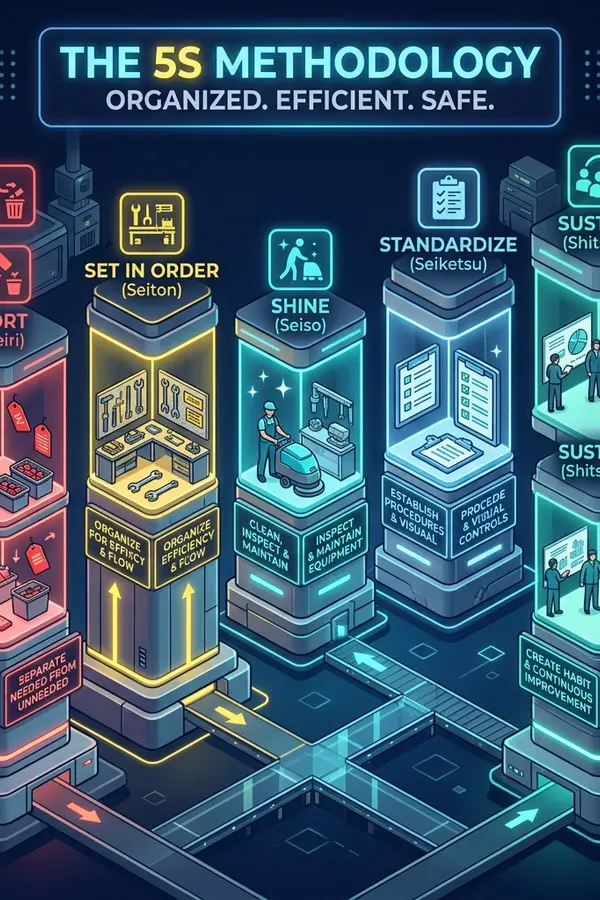
The 5S methodology in manufacturing is a lean management system comprising Seiri (Sort), Seiton (Set in order), Seiso (Shine), Seiketsu (Standardize) and Shitsuke (Sustain). It creates a visual control framework that improves industrial hygiene compliance, eliminates waste and boosts overall factory safety.
Understanding Seiri Seiton Seiso in manufacturing requires looking beyond simple janitorial work. It is a systematic framework designed to optimise the work environment. When implemented correctly, it reduces tool search time from minutes to seconds.
- Sort (Seiri): Remove unnecessary items from the workspace. If a tool is not needed for the immediate task, it does not belong on the floor.
- Set in Order (Seiton): Arrange necessary items logically. Visual control in warehouse areas ensures every tool has a designated shadow board or labelled location.
- Shine (Seiso): Clean the workspace and equipment. A clean machine makes it easy to spot oil leaks or loose bolts early.
- Standardize (Seiketsu): Create consistent routines for the first three steps. Document the rules so every worker knows the expectations.
- Sustain (Shitsuke): Make 5S a habit. This is where regular checks ensure the system does not collapse after a month.
Why You Need an Industrial Facility 5S Audit
An industrial facility 5S audit measures how well a plant maintains its lean housekeeping standards. It assigns a numerical 5S compliance score, helping facility managers identify safety risks, reduce tool search time and ensure continuous improvement during routine Gemba walks.
Many plant heads assume their floor is organised until an external auditor points out the safety risks. A factory safety audit often reveals that poor organisation causes the most workplace accidents. Slippery floors and misplaced equipment are direct results of failing to sustain 5S practices.
Tracking your 5S compliance score facility management gives you a clear baseline. It turns subjective opinions like "the floor looks messy" into objective data. You can track exactly which zones are failing and which supervisors need more training in lean 5S housekeeping.
How to Conduct 5S Audit: The Step-by-Step Process
To conduct a 5S audit effectively, facility managers form a cross-functional team, use a standardised checklist and walk the factory floor to evaluate each of the five pillars on a scale of 1 to 5. The final step involves reviewing the compliance score and assigning corrective actions.
You cannot improve what you do not measure. The 5s audit process steps must be structured and consistent. Treating it as a casual walkthrough defeats the purpose.
- Assemble the Audit Team: Do not rely on one person. Bring together a production supervisor, a maintenance technician and the facility manager. Fresh eyes spot different issues.
- Prepare the Checklist: Use a specific 5S audit checklist for factory zones. Generic checklists rarely cover the nuances of heavy machinery or chemical storage.
- Conduct a Gemba Walk: A Gemba walk for facility managers means going to the actual place where work happens. Do not audit from a desk. Walk the floor, talk to operators and observe the workflow.
- Score the Area: Evaluate each of the 5S categories objectively. Document any discrepancies with photos for the final report.
- Assign Responsibilities: Review the results immediately. If a zone scores poorly on 'Shine', assign a specific person and deadline to fix it.

The Complete 5S Audit Checklist for Factory Floors
A complete factory 5S checklist evaluates sorting (removing clutter), setting in order (visual control and labelling), shining (cleaning schedules), standardising (documented procedures) and sustaining (training records). Facility managers use this checklist during a Gemba walk to calculate the industrial hygiene compliance score.
This is the exact framework you need to evaluate your facility. Rate each question from 1 (Very Poor) to 5 (Excellent). Total the points to determine your 5S compliance score.
| 5S Pillar | Audit Question | Score (1-5) |
|---|---|---|
| 1. Sort (Seiri) | Are all unnecessary items, scrap and unused tools removed from the work area? | |
| Is there a clearly marked red tag area for items pending disposal? | ||
| 2. Set in Order (Seiton) | Is visual control in warehouse and factory areas clear (floor markings, aisle lines)? | |
| Does every tool have a designated place, such as labelled shadow boards? | ||
| 3. Shine (Seiso) | Are machines, floors and workbenches clean and free of oil leaks or debris? | |
| Is cleaning equipment easily accessible and stored correctly? | ||
| 4. Standardize (Seiketsu) | Are manufacturing housekeeping standards documented and visible to all operators? | |
| Do workers know their specific daily 5S responsibilities? | ||
| 5. Sustain (Shitsuke) | Are previous audit results displayed on the shop floor communication board? | |
| Do facility managers conduct regular Gemba walks to enforce the rules? |
How Urja Facility Helps Maintain 5S Compliance
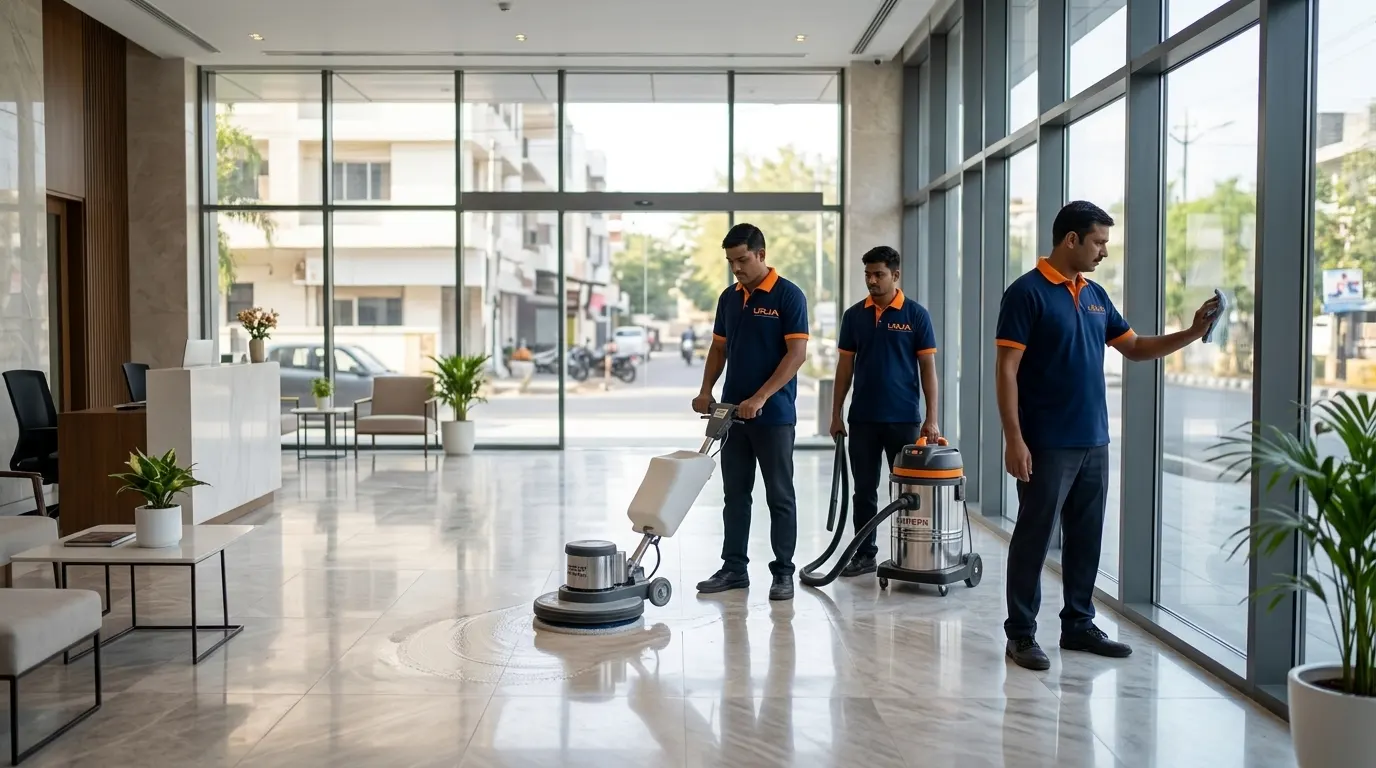
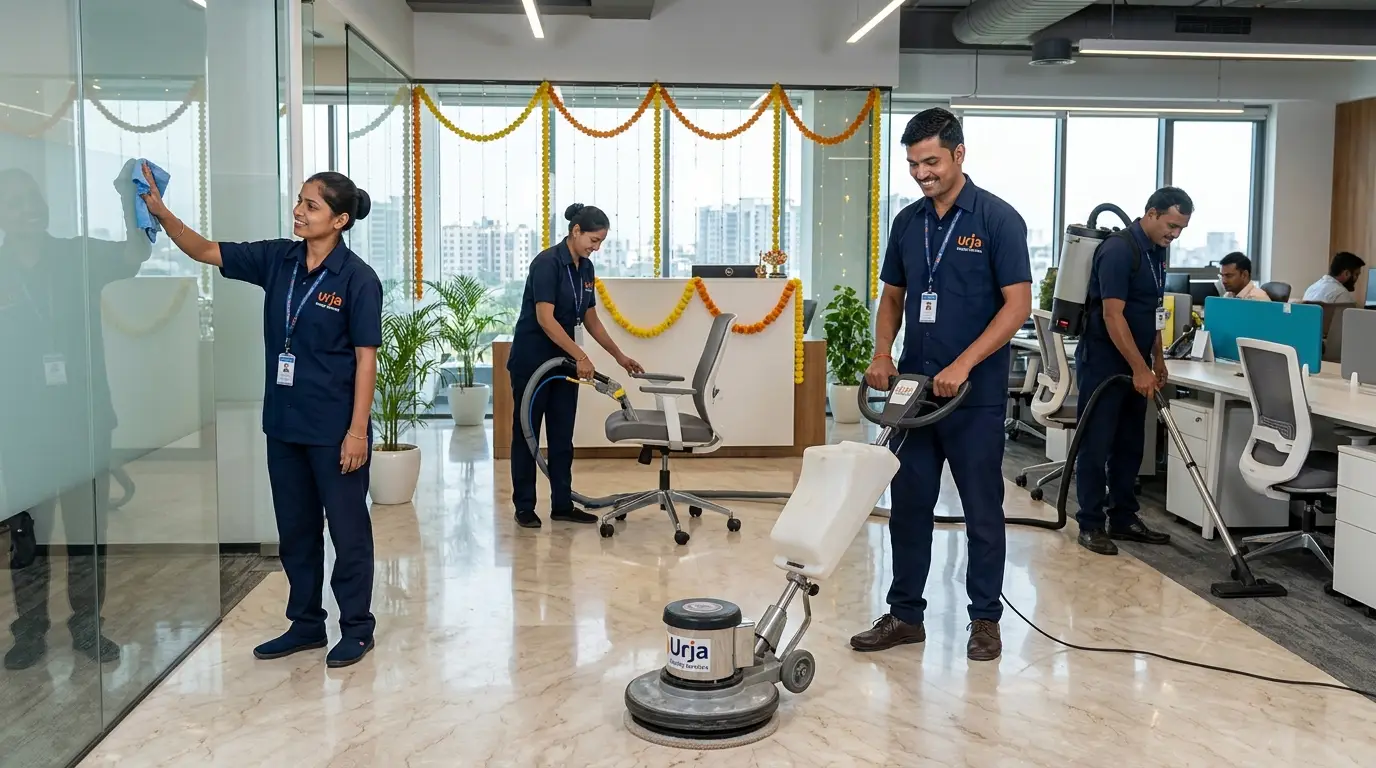
Urja Facility provides mechanised housekeeping services that support lean 5S goals. By deploying trained professionals and industrial cleaning equipment, they help manufacturing plants across Indore maintain high compliance scores and meet strict industrial hygiene standards consistently.
Maintaining a high score requires consistent effort. When your internal team is busy hitting production targets, deep cleaning falls behind. This is exactly where professional intervention helps.
Urja Facility integrates directly with your lean 5S housekeeping goals. We do not just sweep floors; we use mechanised scrubbers, high-pressure jets and trained staff to maintain strict industrial hygiene compliance. Whether it is an automotive plant in Pithampur or a pharmaceutical unit, we ensure your facility is always audit-ready.
Frequently Asked Questions
How often should an industrial facility 5S audit be conducted?
For best results, an industrial facility 5S audit should be conducted weekly by line supervisors and monthly by facility managers to maintain consistent lean 5S housekeeping standards.
What is a good 5S compliance score?
A 5S compliance score above 85% is generally considered excellent in facility management, indicating that the factory safety audit requirements and visual controls are well maintained.
Who should perform the Gemba walk for facility managers?
A Gemba walk should involve cross-functional team members, including the facility manager, safety officer and production supervisors, to ensure all manufacturing housekeeping standards are properly evaluated.