
 Water Hygiene
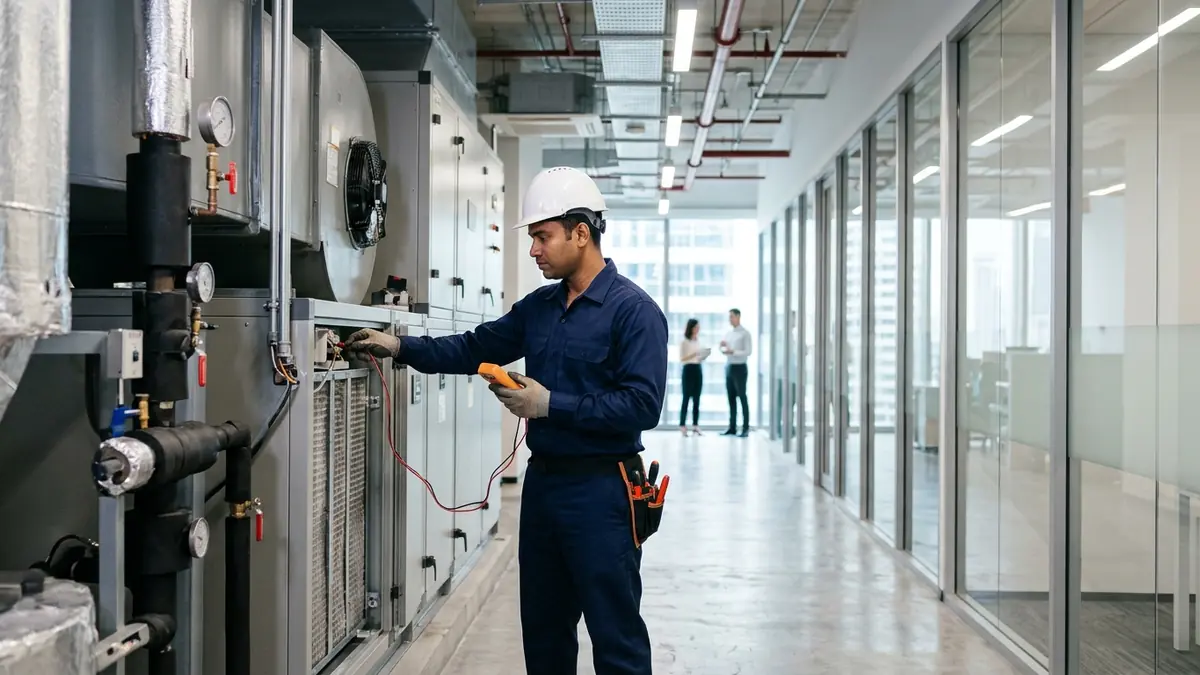
Operating a modern commercial high-rise, industrial manufacturing plant or corporate campus requires precision engineering behind every wall and ceiling void. Centralised air conditioning, high-voltage electrical distribution, water filtration lines and life safety infrastructure must work in total harmony every minute of the business day. Implementing an mep preventive maintenance schedule ensures that mechanical, electrical and plumbing assets operate at peak thermal efficiency while avoiding catastrophic system breakdowns that paralyse daily commercial activities.
In modern industrial facilities, reactive maintenance is the most expensive operational strategy an enterprise can adopt. When a centrifugal chiller plant trips during peak summer humidity or an electrical busbar overheats due to unaddressed harmonic load imbalances, emergency repairs cost up to five times more than scheduled upkeep. Unplanned downtime disrupts tenant productivity, spoils temperature-sensitive goods in manufacturing zones and causes irreversible damage to expensive capital machinery.
This technical guide establishes an actionable MEP maintenance framework aligned with ASHRAE standards, National Building Code regulations and field-tested facility management practices. From daily run-sheet calibrations to annual thermographic audits, facility directors will discover how structured engineering governance delivers continuous uptime, controls utility expenses and protects facility balance sheets.
GUIDE INDEX Table of Contents Quick Navigation
- 01 MEP Preventive Maintenance Schedule: 4 Critical Engineering Pillars
- 02 Commercial HVAC Maintenance Checklist and Air Handling Protocols
- 03 Industrial Electrical Safety Audit Steps and Power Distribution Checks
- 04 Facility Management Preventive Maintenance Framework: Implementation Protocol
- 05 Operational ROI: Preventing Catastrophic Downtime and Energy Spikes
- 06 Frequently Asked Questions (FAQs)
MEP Preventive Maintenance Schedule: 4 Critical Engineering Pillars
An mep preventive maintenance schedule coordinates four interconnected infrastructure systems: heating ventilation and air conditioning (HVAC), electrical power distribution, plumbing public health engineering (PHE) and emergency life safety systems. Structuring inspections across daily, weekly, monthly and quarterly cycles prevents costly equipment downtime and ensures regulatory compliance.
A frequent mistake in commercial building management is treating mechanical, electrical and plumbing infrastructure as separate isolated components. In reality, a disruption in one engineering discipline causes an immediate chain reaction across others. An unwashed condenser coil on an air handling unit forces the electrical motor to draw excessive current, accelerating contactor wear in the motor control centre and elevating power utility billing.
A comprehensive commercial mep maintenance contract integrates all four core disciplines into a unified operational rhythm. Our certified engineering specialists at hard technical maintenance services oversee these exact systems across enterprise facilities in Central India:
Pillar 1 • Climate Control
HVAC & Ventilation Systems
Central chillers, VRF outdoor units, air handling units (AHUs), ventilation fans and cooling towers.
Daily Inspection Chilled water supply and return temperatures, suction discharge pressure and vibration checks.
Monthly Servicing Chemical washing of pre-filters, condensate drain trap flushing and fan belt tension alignment.
Major Routine Quarterly condenser tube descaling, cooling tower biocide treatment and refrigerant leak detection.
Pillar 2 • Power Distribution
Electrical Infrastructure
Transformers, HT and LT panels, air circuit breakers (ACBs), capacitor banks and uninterrupted power supplies (UPS).
Daily Inspection Phase-to-phase voltage balance, neutral current monitoring and power factor correction tracking.
Monthly Servicing Infrared thermal imaging of distribution busbars, contactor cleaning and panel exhaust fan servicing.
Major Routine Quarterly earth pit resistance testing, breaker trip relay timing calibration and transformer oil BDV tests.
Pillar 3 • PHE Networks
Plumbing & Fluid Handling
Hydro-pneumatic booster pumps, submersible sump pumps, pressure reducing valves (PRVs) and drainage lines.
Daily Inspection Header water pressure logging, pump mechanical seal inspection and water meter consumption checks.
Monthly Servicing PRV pressure differential testing, isolation valve full-stroke cycling and sewage basin float switch checks.
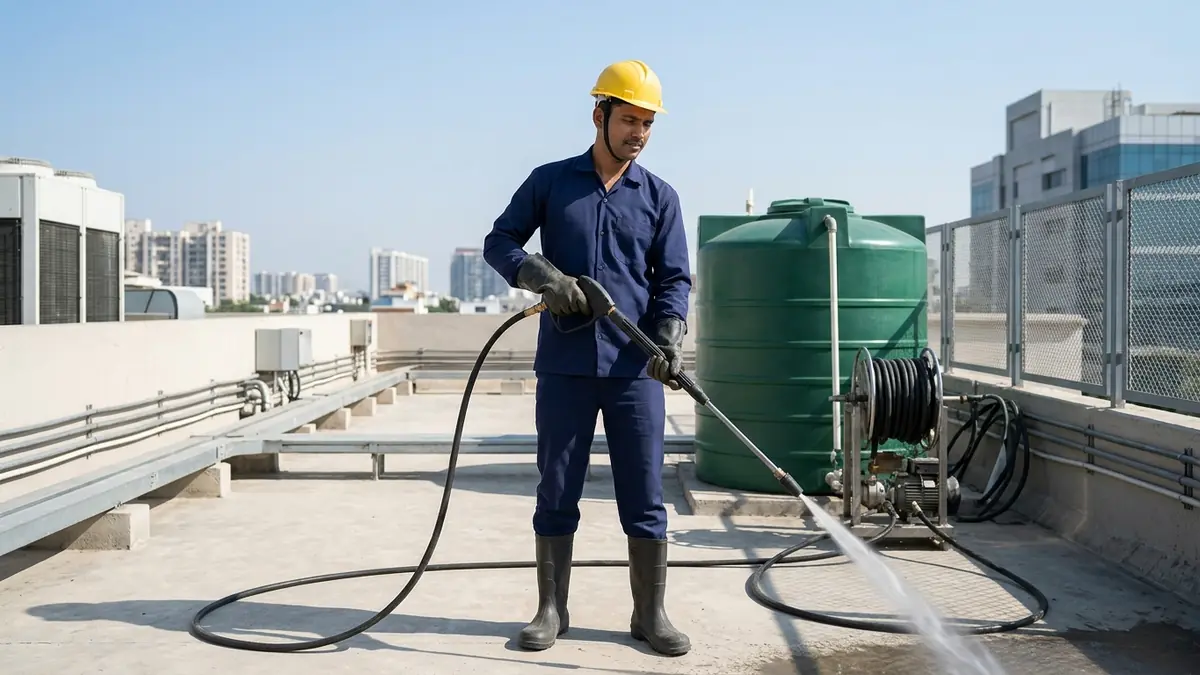
Major Routine Bi-annual underground and overhead potable water storage tank disinfection using automated machines.
Pillar 4 • Life Safety
Emergency Power & Fire Safety
Diesel generator (DG) sets, fire hydrant jockey pumps, smoke extraction fans and motorized fire dampers.
Weekly Inspection DG set no-load test run, starter battery electrolyte specific gravity and fuel day tank level logging.
Monthly Servicing Fire jockey pump automatic cut-in and cut-out pressure calibration, diesel fire engine trial run.
Major Routine Quarterly smoke damper interlock actuation with central fire alarm control panels (FACP).
Synchronising these four disciplines within a documented schedule prevents premature component breakdown, establishing an accountable engineering foundation for industrial campuses and commercial office buildings.
Commercial HVAC Maintenance Checklist and Air Handling Protocols
A rigorous commercial hvac maintenance checklist details specific inspection steps across air handling units, water chillers, cooling towers and air distribution ducts. Maintaining static pressure limits, chemical filter sanitisation and condenser approach temperatures below 2.0 degrees Celsius maximizes thermal comfort and minimizes energy expenditure.
HVAC systems represent the largest single consumer of electrical power in commercial buildings, frequently accounting for 45% to 60% of total facility energy bills. Neglecting basic air conditioning maintenance triggers immediate performance degradation. According to ASHRAE guidelines, a microscopic 0.024-inch layer of particulate soot or biological biofilm on an evaporator coil reduces heat transfer efficiency by over 21%.
The visual matrix below illustrates the structured inspection intervals and key performance benchmarks required to maintain commercial HVAC assets at peak efficiency:
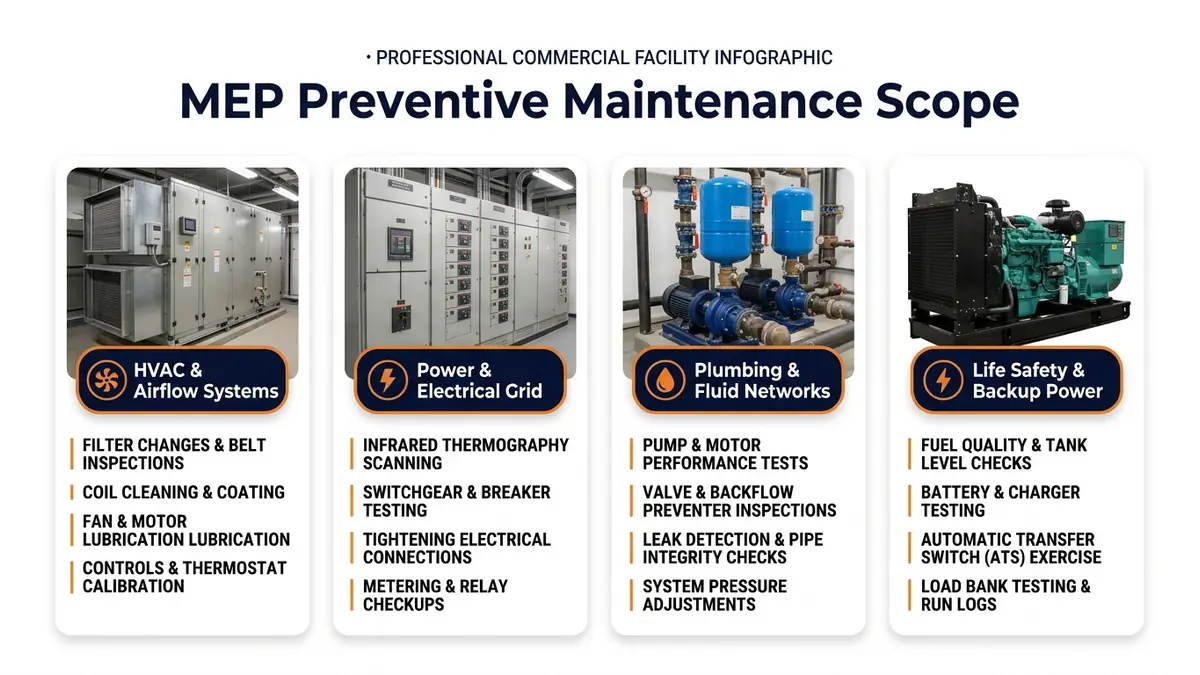
Figure 1: Commercial MEP Preventive Maintenance Scope across HVAC, Electrical Grid, Plumbing Networks and Life Safety Systems.
To keep air conditioning systems functioning without sudden cooling failures, technical teams must follow a rigorous commercial hvac maintenance checklist categorised by operational subsystems:
Air Handling Units (AHUs)
Air Quality & Airflow Maintenance
- AHU Filter Cleaning Frequency: Pre-filters washed every 15 to 30 days; fine microvee filters inspected weekly for static differential pressure drops exceeding 150 Pascals.
- Cooling Coil Sanitisation: Quarterly chemical foam cleaning of aluminium cooling fins using non-corrosive coil cleaners to eliminate mould spores and bacterial accumulation.
- Fan Drive Assembly: Inspect V-belts monthly for tension deflection, micro-cracks and pulley laser alignment to eliminate vibrational bearing stress.
- Condensate Drain Pan: Clean and treat drain pans monthly with biocidal pan tablets to prevent slime blockages, drain pan overflows and foul indoor air odour.
Chiller Plant Operations
Refrigeration & Heat Exchange
- Approach Temperature Delta: Monitor leaving chilled water vs. refrigerant boiling temperature daily; maintain condenser approach delta strictly between 1.5 and 2.0 degrees Celsius.
- Lubrication System: Log compressor oil levels, check differential oil pressure and conduct bi-annual laboratory spectroscopic oil analysis for metal wear particles.
- Tube Descaling: Execute mechanical brush or chemical descaling on shell-and-tube condensers annually prior to the summer cooling peak.
- Refrigerant Charge: Monitor moisture indicators in sight glasses and run ultrasonic leak detection across flare joints, valve packings and compressor flanges.
Executing these preventive procedures maintains consistent indoor environmental quality and prevents unexpected compressor seizures, an approach delivered across commercial complexes through our facility management AMC solutions in Indore.
Industrial Electrical Safety Audit Steps and Power Distribution Checks
Industrial electrical safety audit steps protect commercial assets from catastrophic arc flashes, insulation degradation and harmonic overheating. Routine thermal imaging, transformer dielectric testing, earth resistance verification and breaker trip calibrations guarantee uninterrupted plant power distribution and statutory regulatory compliance.
Electrical distribution networks operate under constant thermal stress caused by non-linear computer loads, variable frequency drives and continuous heavy motor operations. When electrical connections vibrate loose over months of continuous operation, contact resistance rises, generating intense localised heat that leads to insulation breakdown, arcing and devastating commercial fires.
To eliminate electrical hazards and comply with Central Electricity Authority Safety Regulations, engineering personnel must execute structured industrial electrical safety audit steps across the power distribution train:
Infrared Thermographic Scanning
Perform non-invasive thermography every month on main switchboards, breaker terminations and capacitor banks under full operational load. Identify thermal hot spots exceeding ambient temperature by 15 degrees Celsius before joint melting or flashovers occur.
Air Circuit Breaker (ACB) Calibration
Execute secondary injection testing and micro-ohm contact resistance tests bi-annually on major ACBs. Lubricate mechanical racking linkages and verify magnetic overload, short-circuit and earth fault trip relay timing curves.
Earth Electrode Resistance Audit
Conduct earth resistance measurements quarterly on all equipment earthing pits and lightning arrester down-conductors using calibrated digital earth testers. Ensure earthing grid resistance remains strictly under 1.0 Ohm for sensitive commercial electronics.
Transformer Oil Dielectric Testing
Collect oil samples from oil-cooled distribution transformers annually to test Breakdown Voltage (BDV minimum 50 kV), moisture content, acidity and dissipation factors, ensuring dielectric insulation withstands transient voltage surges.
Maintaining these strict electrical auditing safeguards protects technician safety, prevents expensive switchgear damage and satisfies industrial safety compliance mandates across commercial properties enrolled in our annual maintenance contract programs.
Facility Management Preventive Maintenance Framework: Implementation Protocol
A facility management preventive maintenance framework transitions building operations from reactive troubleshooting to structured predictive governance. Asset QR tagging, run-hour maintenance scheduling, critical spares staging and digitized CAFM auditing ensure high equipment reliability and transparent SLA compliance.
Modern commercial buildings cannot depend on paper logbooks that get misplaced or filled with fictitious readings. Establishing a durable facility management preventive maintenance framework requires a systematic 4-phase rollout that connects field technicians directly with supervisory governance and building management systems (BMS).
The operational framework below highlights the specific inspection stations and quantitative performance benchmarks enforced during commercial technical management:
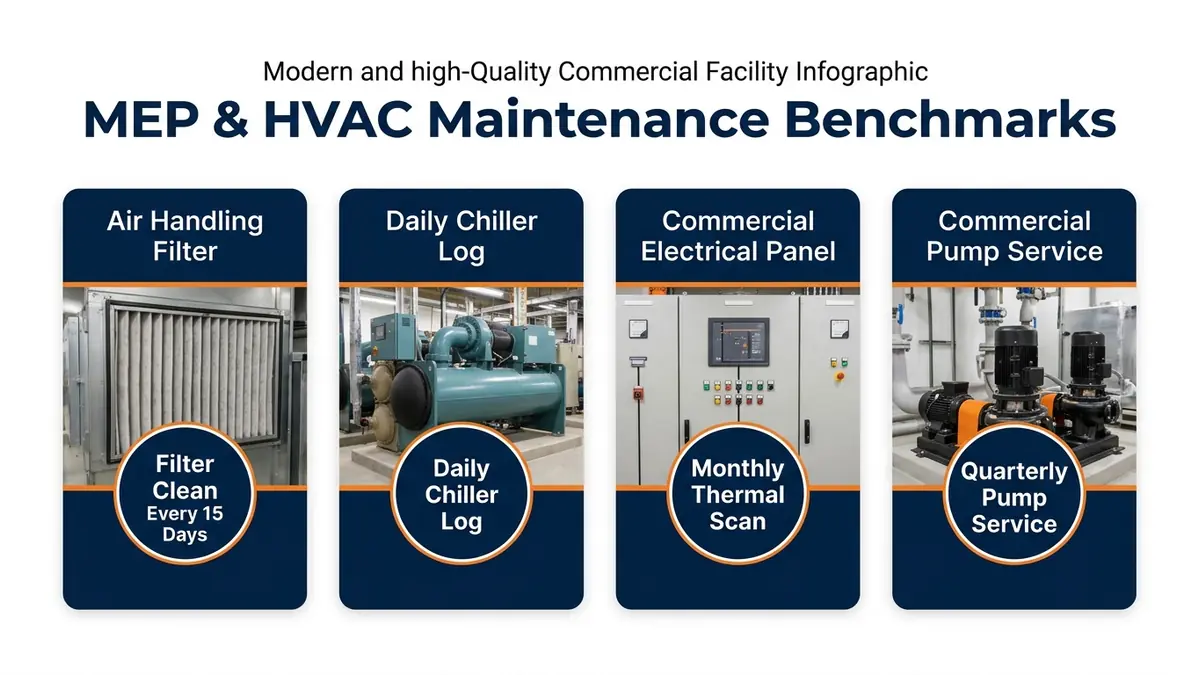
Figure 2: Operational Maintenance Benchmarks and Frequency Inspection Stations for Commercial Building Assets.
Implementing an enterprise-grade maintenance programme follows a clear sequential roadmap designed for corporate IT hubs, industrial plants and mixed-use commercial developments:
Step 1
Asset Inventory & QR Code Tagging
Catalogue every piece of MEP equipment, recording OEM nameplate specifications, design operating curves, motor serial numbers and installation dates. Affix weatherproof QR code tags to enable instant digital mobile logging by on-site technicians.
Step 2
Dynamic Run-Hour Scheduling
Establish dual-trigger work orders combining standard calendar intervals (weekly, monthly) with cumulative operational run-hours. Equipment operating 24x7 receives priority lubrication and filter replacement long before standard calendar dates arrive.
Step 3
Critical Spares Inventory Staging
Maintain an on-site store of high-wear mechanical consumables including matched V-belt sets, mechanical pump shaft seals, spare contactors, control fuses and clean replacement air filter media to ensure immediate mean time to repair (MTTR).
Step 4
CAFM Digitisation & Joint Audits
Enforce paperless operation via Computer-Aided Facility Management (CAFM) software. Conduct monthly joint engineering walkthroughs with facility stakeholders, reviewing thermal scans, energy consumption trends and SLA performance metrics.
This structured governance model eliminates ambiguity, ensuring that every engineering rupee spent delivers verifiable asset protection as detailed in our guide to facility management AMC scope and SLA guidelines.
Operational ROI: Preventing Catastrophic Downtime and Energy Spikes
Executing an MEP preventive maintenance schedule delivers substantial return on investment by reducing commercial utility bills by 18% to 28%, extending capital machinery lifespan by up to 40% and eliminating revenue losses caused by sudden operational shutdowns.
Corporate finance heads frequently question the upfront budget allocations required for dedicated hard technical maintenance contracts. However, financial analysis reveals that the true cost of neglected MEP systems dwarfs the price of structured preventive care. When commercial systems run unmaintained, energy consumption spikes quietly while internal components experience rapid, irreversible degradation.
The comparative financial matrix below contrasts reactive firefighting against a proactive engineering maintenance model across a typical 100,000 square foot commercial property:
| Operational Parameter | Reactive Maintenance (Run-to-Fail) | Proactive MEP Preventive Schedule | Commercial Financial Impact |
|---|---|---|---|
| HVAC Energy Efficiency | Chilled water approach exceeds 3.5°C; fouled coils draw 30% more power | Approach kept under 2.0°C; coils cleaned monthly with non-acidic foam | 18% to 28% reduction in monthly power utility bills |
| Chiller & Motor Lifespan | Early compressor burnouts at 7 to 9 years due to dirty oil and vibration | Assets achieve designed 15 to 20 year operational lifespan | Defers multimillion-rupee capital replacement expenditure |
| Emergency Repair Costs | Expedited emergency technician call-outs and rush courier fees for parts | Scheduled parts replacements during non-operational weekend hours | Reduces annual repair and replacement costs by 45% |
| Occupant Comfort & Air Quality | Frequent hot-and-cold complaints, humid indoor air and musty odour | Stable 23°C temperature, 50% relative humidity and filtered fresh air | Higher tenant retention and improved workforce productivity |
| Electrical Fire Risk | Undetected loose busbar bolts cause arcing, panel fires and outages | Monthly infrared thermography pinpoints hot spots before failure | Zero arc flash risks and lower property insurance premiums |
Investing in scheduled preventive maintenance transforms building operations from a reactive cost centre into a reliable asset value driver, protecting enterprise capital across every property entrusted to our facility management teams.
FAQs
Essential questions regarding an MEP preventive maintenance schedule clarify optimal AHU filter replacement frequencies, electrical thermography benefits, run-hour versus calendar scheduling, daily chiller parameters, statutory building regulations and energy efficiency savings.
What is the recommended AHU filter cleaning frequency for commercial offices?
Pre-filters should be washed and chemically treated every 15 days in heavy industrial or dusty city corridors and at least monthly in corporate IT parks. Fine microvee and HEPA secondary filters require static pressure monitoring every week, with replacements scheduled every 6 to 12 months based on differential pressure readings.
How does electrical thermography prevent unexpected commercial power outages?
Infrared thermographic scanning inspects main distribution boards, busbars, capacitors and circuit breakers under actual operational load. It detects abnormal thermal signatures caused by loose terminations, unbalanced phase loads or failing contacts weeks before an electrical fire or breaker trip occurs.
Why is run-hour tracking more effective than pure calendar scheduling for MEP maintenance?
Calendar schedules assume uniform equipment usage, whereas actual operating hours vary dramatically between peak summer cooling and moderate seasons. Tracking machine runtime hours ensures components such as compressor lubricants, blower bearings and pump seals receive service based on actual wear, preventing premature failure and reducing unnecessary consumable expenditure.
What parameters should be monitored daily on a water-cooled commercial chiller?
Daily chiller inspections must record refrigerant suction and discharge pressures, evaporator and condenser water entering and leaving temperatures, compressor oil pressure and level, motor operating amperes and condenser approach temperature delta. An approach temperature exceeding 2.5 degrees Celsius indicates scaling in heat exchanger tubes.
What statutory compliance standards govern commercial MEP and fire safety systems in India?
Commercial MEP operations in India are governed by the National Building Code (NBC 2016 Part 4 and Part 8), the Central Electricity Authority (CEA) Safety Regulations 2010, local State Electricity Board inspection norms, State Pollution Control Board guidelines for diesel generator emissions and local municipal fire department NOC compliance.
How much energy can an integrated MEP preventive maintenance programme save annually?
A rigorously executed MEP preventive maintenance programme routinely reduces total facility electrical consumption by 18% to 28%. Clean heat exchanger coils, properly tensioned fan belts, balanced three-phase power distribution and calibrated thermostat deadbands prevent compressors and motors from drawing excessive kilowatts.