
 Corporate
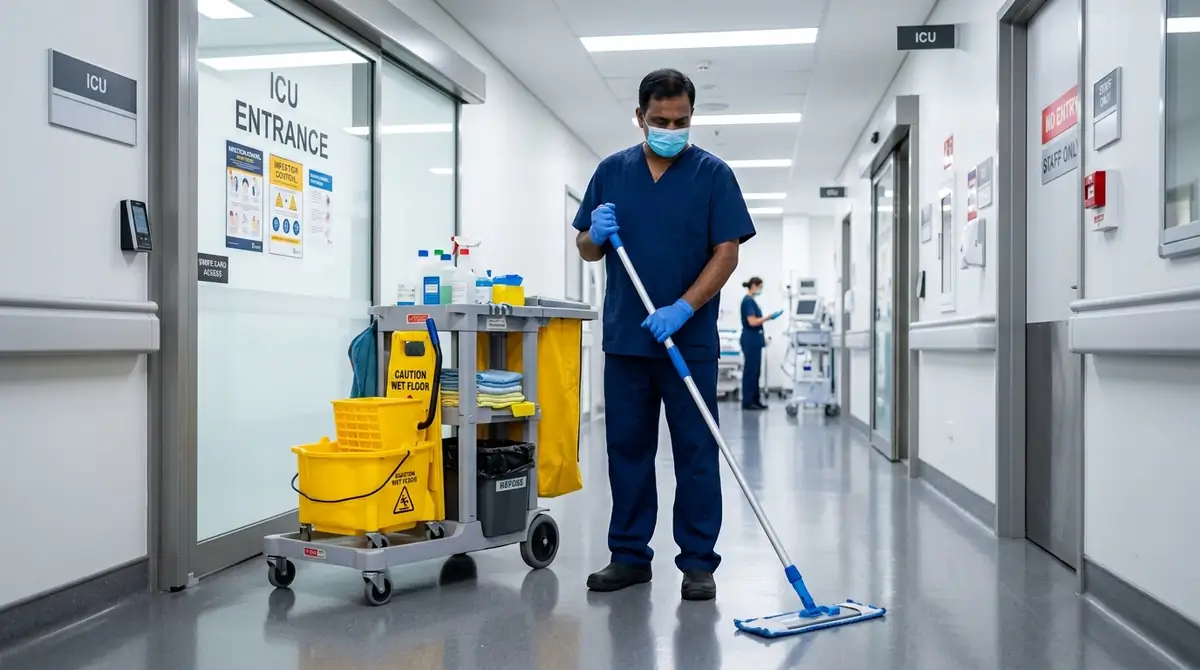
In modern multi-specialty hospitals, healthcare quality is measured not only by surgical outcomes and clinical expertise, but also by the microbiological safety of the physical environment. Operating theatres and Intensive Care Units house the most vulnerable patient populations, where even an invisible film of opportunistic bacteria can trigger serious catheter-related bloodstream infections, surgical site infections or ventilator-associated pneumonia. Implementing rigorous nabh hospital housekeeping protocols creates a scientific defence barrier, transforming hospital sanitation from casual broom work into an evidence-based clinical process.
Under the National Accreditation Board for Hospitals & Healthcare Providers 5th Edition standards, environmental hygiene is governed by clear chapters on Hospital Infection Control (HIC) and Facility Management and Safety (FMS). Healthcare directors, nursing superintendents and facility heads across Indore and Central India face continuous scrutiny during accreditation rounds. Meeting these benchmarks demands disciplined standard operating procedures, certified non-corrosive chemical disinfectants, mechanized equipment and regular staff training.
This technical guide details the 4-zone environmental cleaning framework, breaks down step-by-step ICU and operating room terminal sanitisation, clarifies biomedical waste segregation under BMWM Rules 2016 and demonstrates how partnering with our specialized hospital facility management services maintains continuous audit readiness.
NABH Hospital Housekeeping Protocols: The 4-Zone Environmental Cleaning Framework
NABH classifies hospital environments into four risk tiers based on infection susceptibility: Category A Ultra-Clean (OTs, ICUs), Category B High Risk (Emergency, Isolation), Category C Moderate Risk (Wards, Labs) and Category D Low Risk (Lobbies, Admin). Each tier enforces specific disinfectant chemistries, mop heads and cleaning frequencies.
A common mistake in non-accredited healthcare setups is treating all rooms with the same bucket of water and generic phenyl solution. This practice acts as a vehicle for bacterial cross-transmission. NABH guidelines mandate that hospital facilities establish clear environmental zoning based on patient susceptibility and microbial exposure risk.
Every clinical ward, procedure room and administrative area falls into one of four defined operational zones, which our teams maintain through scheduled mechanized housekeeping services across Central India:
Zone A • Ultra-Clean
Critical Clinical Units
Operating Theatres, Surgical ICU, Neonatal ICU, Cardiac Units and Transplant Rooms.
Chemistry 4th-Gen Quats (Microquat / Taski R2) and Silver Hydrogen Peroxide Mist.
Schedule Pre-operative wipe, between-case turnover and 3x daily in ICU units.
KPI Benchmark Zero dust tolerance and ATP surface test strictly under 50 RLU.
Zone B • High Risk
Emergency & Isolation Wards
Casualty bays, Hemodialysis consoles, Isolation rooms and Chemotherapy daycare.
Chemistry 0.1% to 0.5% Sodium Hypochlorite (1,000 to 5,000 ppm available chlorine).
Schedule Every 8-hour shift change, plus immediate clean upon patient discharge.
KPI Benchmark Strict 10-minute wet chemical contact time before surface wipe.
Zone C • Moderate Risk
General Inpatient & Diagnostics
General recovery wards, Pathology collection points, Radiology and Pharmacy.
Chemistry Neutral hospital detergent followed by 0.1% hypochlorite floor mopping.
Schedule 2x daily damp clean, plus continuous spot cleaning for spills.
KPI Benchmark Top-to-bottom damp cleaning path using dedicated blue microfibre.
Zone D • Low Risk
Lobbies & Administration
OPD waiting lounges, billing desks, consultation chambers and corridors.
Chemistry Neutral pH multi-surface solution with auto-scrubber quick drying.
Schedule Electrostatic dust mopping and mechanized scrubbing 2x daily.
KPI Benchmark Zero dry brooming policy to eliminate airborne dust particles.
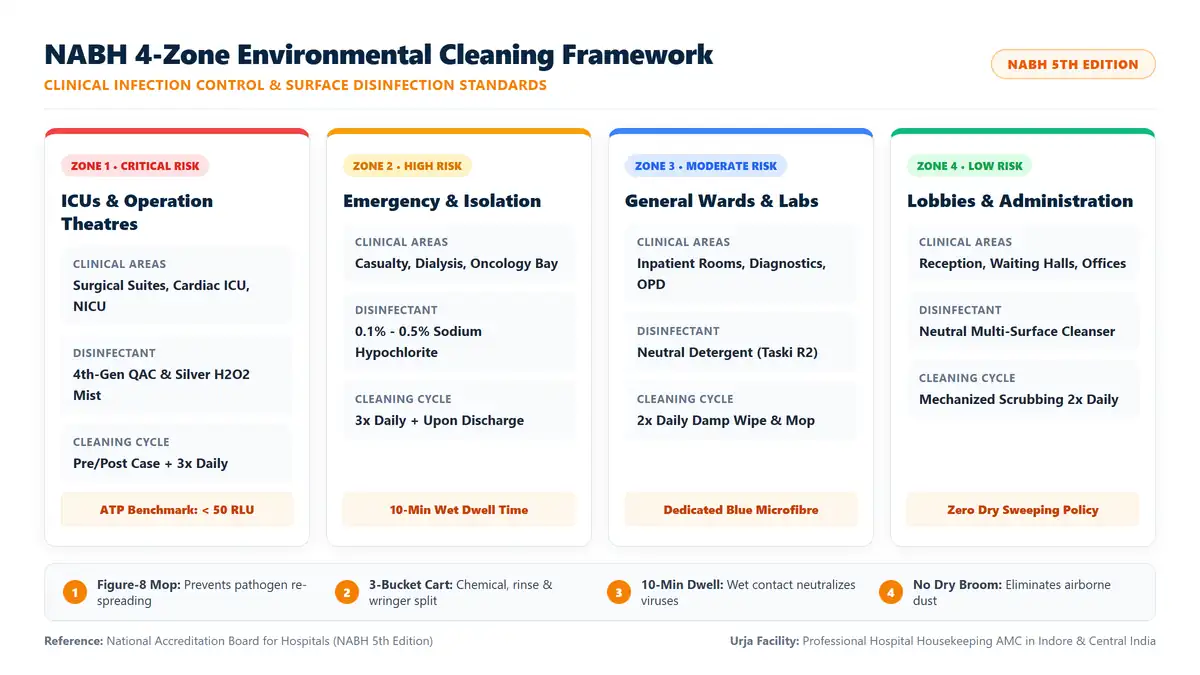
Figure 1: 4-Zone Environmental Cleaning Framework Mandated by NABH 5th Edition Guidelines
ICU Terminal Cleaning SOP: Step-by-Step Procedure Upon Patient Discharge
An ICU terminal cleaning SOP involves five sequential steps: personal protective equipment donning, infected linen bagging, high-touch surface disinfection with 10-minute chemical dwell times, waterproof mattress turnover and figure-of-8 floor mopping verified below 50 RLU by ATP swabs.
When an intensive care patient is transferred or discharged, the surrounding bed unit remains heavily colonized by resident skin microbes, resistant pathogens and respiratory droplets. Standard surface wiping is insufficient to safeguard the incoming patient. Following principles similar to specialized residential care facilities and cleanrooms, our teams execute a rigorous ICU terminal cleaning SOP following NABH infection control recommendations:
| Step | Operational Action | Target Equipment / Surface | Chemical Formulation & Dwell |
|---|---|---|---|
| Phase 1 | PPE Donning & Linen Strip-Down | Linen stripping, suction tubing disposal and used clinical sharps check. | Seal infected linen into soluble bags; BMW red/yellow bags. |
| Phase 2 | High-Touch Contact Sanitisation | Motorized bed hand-controls, IV stand hooks, ventilator screen frames and bed rails. | 4th-Gen Quaternary Ammonium (Diversey Microquat / Taski R2), 10 min dwell. |
| Phase 3 | Mattress & Frame Turnover | Top surface, underside, edge zip seams and hydraulic bed elevation shafts. | Chlorine-based disinfectant or alcohol-free surface spray, 10 min wet contact. |
| Phase 4 | Perimeter Wall & Fixture Wiping | Oxygen flow meter knobs, wall suction outlets, monitor brackets and privacy curtains. | Folded yellow microfibre cloths using 8-face folding technique. |
| Phase 5 | Figure-of-8 Floor Decontamination | Bed space floor, sub-bed perimeter and threshold line joining main ICU aisle. | 3-bucket dual wringer mopping using 0.5% freshly diluted hypochlorite. |
A central rule highlighted during hospital audits is the observance of chemical contact dwell times. Spraying a chemical on a monitor rail and instantly wiping it off with a dry towel renders the disinfectant ineffective. Pathogens require continuous wet contact for at least 5 to 10 minutes to disrupt cellular walls. Our on-site supervisors in Indore enforce strict timer-based contact adherence before beds are remade for new admissions.
Operating Theatre Infection Control Guidelines: Sterile Turnover Workflows
Operating theatre infection control guidelines dictate four distinct cleaning cycles: morning pre-op dusting, intra-operative fluid containment, between-case sterile turnover and end-of-day terminal scrub down, replacing hazardous formalin fumigation with silver-hydrogen peroxide dry misting.
Operating theatres represent the highest vulnerability zone in any surgical hospital. Airborne particles and touchpoint biofilms directly correlate with surgical site infection rates. According to modern operating theatre infection control guidelines, housekeeping attendants must never enter an OT suite in standard street wear or generic ward overalls. Staff must wear scrub suits, hair covers, surgical masks and dedicated OT clogs that never cross the red line demarcation.
1. Morning Pre-Operative Damp Dusting
Executed at least 45 minutes before the first scheduled surgery of the day. Attendants use hospital-grade microfibre damp cloths soaked in neutral disinfectant to wipe surgical light domes, pendant arms, anesthesia carts and the operating table. Dry dusting is strictly forbidden because it stirs dormant particles into the sterile laminar airflow zone.
2. Intra-Operative Fluid and Spill Containment
If blood, body fluids or irrigation saline spill during surgery, the floor technician does not wait until the operation finishes. Using an approved spill kit, the attendant immediately cordons the splash zone with absorbent material, neutralises it with hospital-grade disinfectant and clears the slip hazard without breaking sterile field lines.
3. Between-Case Sterile Turnover (15-Minute Protocol)
Between surgical cases, the housekeeping team executes a rapid, systematic turnover clean:
01
Soiled Linen & Waste Clearance
Remove surgical drapes, patient gowns and Mayo stand covers into laundry hampers. Seal all yellow and red biohazard bags immediately.
02
OR Table & Pad Sanitisation
Wipe the surgical table pad, arm boards, safety straps and pedestal column using fast-acting quaternary ammonium disinfectant.
03
Surgical Hardware Disinfection
Disinfect diathermy foot switches, suction bottles, monitor screens, anesthesia consoles and patient transfer trolleys.
04
Central Perimeter Mopping
Mop the central 10-foot operating zone using a fresh microfiber flat pad and the 3-bucket system, working outward from the operating table.
4. End-of-Day Terminal Cleaning and Modern Dry Fogging Protocols
At the end of each surgical list, the theatre undergoes an exhaustive top-to-bottom scrub down. Walls, ceiling supply vents, movable equipment castors, doors and kick-plates are thoroughly disinfected according to strict sterile protocols, much like our certified cleanroom cleaning standards.
Today, formalin fumigation is recognized as a hazardous practice because formaldehyde vapor is a classified human carcinogen that produces toxic residues and requires 24 hours of room lockout. Modern operating theatre fumigation fogging protocols under NABH standards utilize ultra-fine dry fogging with 0.5% hydrogen peroxide stabilized with silver nitrate or automated aerosolised hydrogen peroxide machines. This micro-aerosol reaches every microscopic crevice, kills bacterial endospores and fungal spores within 60 minutes and breaks down safely into harmless oxygen and water without damaging sensitive robotic or laparoscopic cameras.
Hospital Surface Disinfection Standards & Approved Chemical Dilution Ratios
Hospital surface disinfection standards mandate non-corrosive, non-toxic formulations including 0.1% sodium hypochlorite for general clinical floors, 1% hypochlorite for blood spills and 4th-generation quaternary ammonium solutions (Taski R2/Microquat) for electronic and high-touch patient surfaces.
Selecting the right chemical at the right dilution is vital for pathogen elimination and asset preservation. Applying harsh bleaching agents directly onto stainless steel ventilator panels or operating table joints will cause pit corrosion and destroy costly medical electronics. NABH-compliant hospital surface disinfection standards mandate specific chemical formulations categorized by surface compatibility:
| Chemical Formulation | Recommended Dilution | Target Hospital Surfaces | Required Contact Time |
|---|---|---|---|
| Sodium Hypochlorite | 0.1% (1,000 ppm chlorine) | Non-critical floors, corridors and general ward washrooms. | 10 minutes wet contact |
| High-Conc Hypochlorite | 1.0% (10,000 ppm chlorine) | Blood spills, body fluid leaks and laboratory discard jars. | Strictly 20 minutes |
| 4th-Gen Quat (Taski R2) | 20 ml to 40 ml per litre water | ICU bedrails, monitor housings, patient table tops and acrylic panels. | 5 to 10 minutes wet film |
| Alcohol Surface Wipes (70%) | Ready-to-use isopropyl | Stethoscope diaphragms, pulse oximeter probes and thermometer shafts. | Allow to air dry (1 to 2 min) |
| Silver-Hydrogen Peroxide | 5% to 10% solution for fogging | OT dry misting and bone marrow transplant unit bio-decontamination. | 60 minutes room closure |
Chlorine solutions lose microbicidal potency quickly upon exposure to light and air. Under our standard operating protocols, our attendants prepare fresh sodium hypochlorite dilutions at the start of every nursing shift and employ professional floor cleaning services in Indore using single-disc rotary scrubbers for non-critical corridors.
Color Coded Microfiber & 3-Bucket Mopping: Preventing Cross-Infection
NABH color-coding protocols enforce four distinct microfibre cloth colors: red for sanitary fixtures, yellow for isolation and ICU patient beds, blue for general furniture and green for pantries, coupled with 3-bucket mopping trolleys to stop cross-contamination.
Cross-contamination occurs when cleaning gear transfers microbes from an infected zone into a clean patient cubicle. The standard string mop dipped into a single bucket of dirty grey water does not clean floors; it merely distributes bacteria across the floor surface. To solve this, accredited hospitals implement the strict color coded cleaning cloth hospital NABH protocol alongside mechanized 3-bucket mopping trolleys.
The 4-Color Microfiber System
Attendants are trained to fold each microfiber cloth into eight distinct usable faces. Once a face is contaminated, it is flipped to a clean face, guaranteeing eight clean wipes without redipping into dirty water:
Red Cloths • Sanitary Ware
Exclusively for high-contamination fixtures: toilet bowls, urinals, floor gullies and bedpan hoppers. Red cloths never leave the washroom perimeter.
Yellow Cloths • Patient Zones
Reserved for critical clinical contact: ICU bedrails, infusion pumps, ventilator consoles, cardiac monitors and isolation bed frames.
Blue Cloths • General Furniture
Used across general non-clinical areas: nursing stations, doctors' desks, patient visitor chairs, file storage and counter surfaces.
Green Cloths • Nutrition Areas
Dedicated to catering and dietary spaces: pantry microwave counters, food trays, staff dining tables and water cooler points.
The Scientific 3-Bucket Mopping Protocol
Our cleaning crews operate dedicated 3-bucket mopping trolleys clearly marked by distinct functional colors:
Bucket 1: Fresh Disinfectant (Blue)
Contains fresh, accurately diluted disinfectant chemical solution such as quaternary ammonium formulation.
Bucket 2: Soiled Water (Red)
Placed directly beneath the wringer to collect dirty water pressed from the mop pad after floor wiping.
Bucket 3: Clean Rinse Water (Grey)
Contains plain water to rinse away trapped dirt particles before re-charging the mop pad in Bucket 1.
Floors are mopped using the classic figure-of-8 overlapping stroke pattern. This continuous loop pushes dirt forward toward the cleaner, preventing dirty wheels or shoes from walking over freshly sanitized floor patches.
Clinical Waste Disposal Protocols: Bio-Medical Waste Management Rules 2016
Clinical waste disposal protocols under BMWM Rules 2016 require immediate point-of-generation segregation into Yellow (anatomical/soiled), Red (recyclable plastics), White (puncture-proof sharps) and Blue (glassware) containers with strict barcode tracking and max 48-hour storage limits.
Segregating clinical waste at the exact point of generation is a legal mandate under the Bio-Medical Waste Management Rules 2016 (Ministry of Environment, Forest & Climate Change) and a vital NABH patient safety indicator. Whether in large multi-specialty trauma centers or smaller healthcare clinics and daycare centers, implementing certified clinical waste disposal protocols ensures complete legal compliance and occupational safety for hospital personnel.
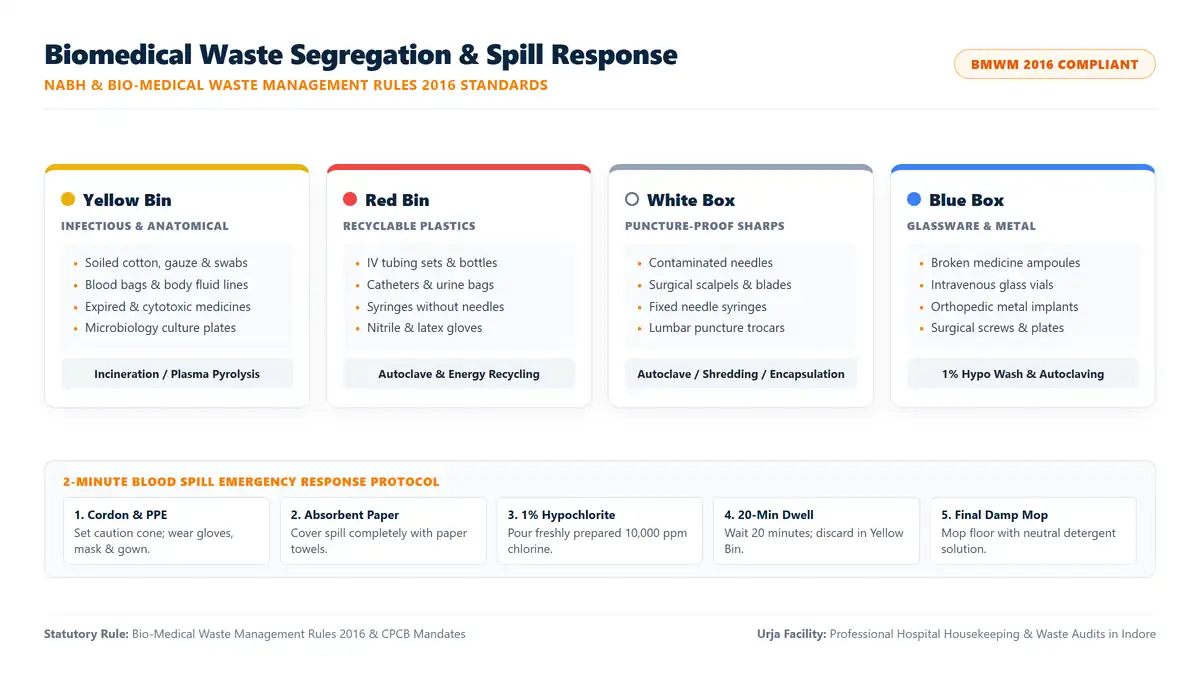
Figure 2: NABH & CPCB Mandated Bio-Medical Waste Color Segregation and Treatment Pathways
Housekeeping staff empty waste receptacles when they reach three-quarters (75%) capacity. Bags are never filled to the brim to prevent accidental tears, needle punctures or aerosol release during knotting. Every waste liner is labeled with a barcoded tracking sticker indicating ward origin, generation date and gross weight before transit to the central hospital BMW storage room, which must never exceed 48 hours of holding time.
The 2-Minute Blood Spill Management Protocol in Clinical Wards
The hospital spill management protocol follows five quick steps: isolate the area with signage, wear comprehensive PPE, cover the spill with absorbent paper, pour freshly prepared 1% sodium hypochlorite for 20 minutes dwell time and discard saturated towels into yellow biohazard bags.
Accidental blood splashes, ruptured drain bags or spilled sputum containers can happen unexpectedly in emergency departments, surgical wards and diagnostic labs. Untrained workers often commit the error of running a standard mop straight through fresh blood, splashing infectious hepatitis B or HIV pathogens across several meters of floor area. NABH enforces an immediate spill management protocol hospital action sequence:
Step 01
Cordon & Wear PPE
Place a yellow caution board. Don heavy nitrile gloves, face shield, triple-layer mask and a fluid-resistant apron.
Step 02
Paper Containment
Carefully place absorbent paper towels over the spill, working inward to stop fluid spreading along floor tile joints.
Step 03
1% Hypochlorite
Saturate the paper towels with freshly mixed 1% Sodium Hypochlorite solution (10,000 ppm chlorine). Never spray dry.
Step 04
20-Min Contact Dwell
Leave untouched for 20 minutes to achieve complete pathogen kill. Lift soaked paper using forceps into a yellow bag.
Step 05
Mop & Hand Wash
Damp mop the area with neutral floor detergent. Discard PPE safely into clinical waste and perform a 6-step hand wash.
For more insights on facility hygiene standards, review our operational guide on how to maintain hospital sanitization standards in healthcare facilities.
HICC Audits & Quality Control: ATP Bioluminescence & Swab Validation
NABH quality surveillance involves weekly Hospital Infection Control Committee (HICC) rounds, microbial air settle plates and handheld ATP bioluminescence swab testing with a strict pass benchmark below 50 Relative Light Units (RLU) on critical clinical surfaces.
A hospital surface that appears clean to the naked eye can still harbour viable pathogen colonies. The hospital infection control committee HICC protocols under NABH require objective, measurable surveillance systems to assess the efficacy of housekeeping interventions. Our healthcare supervisory teams integrate three layers of scientific quality control:
Method 01 • Instant Swab
ATP Surface Bioluminescence
Handheld luminometers measure adenosine triphosphate on bedrails and light switches. Surfaces below 50 RLU pass; readings over 100 RLU trigger immediate re-cleaning.
Method 02 • Bio-Load Assay
Microbial Settle Plates
Exposed nutrient agar plates verify operating room air quality. Standards mandate under 35 CFU/m³ in standard OTs and under 10 CFU/m³ in ultra-clean laminar flow suites.
Method 03 • Covert Audit
Fluorescent Marker Audits
Supervisors mark random touchpoints with invisible lotion. Post-cleaning blacklight inspections instantly confirm whether attendants reached all high-touch angles.
Maintaining these verification records is valuable when defending clinical infection statistics during triennial NABH surveillance audits.
Why Healthcare Institutions in Indore Partner with a Specialized Housekeeping AMC
Partnering with a specialized hospital housekeeping AMC provides healthcare centers with verified janitorial manpower, hospital-grade equipment, institutional Diversey/Taski chemical inventory and seamless compliance with NABH, MPPCB and ESI/PF labor regulations.
Managing healthcare housekeeping internally often presents administrative challenges: unpredictable absenteeism among sweepers, improper chemical mixing by untrained helpers, lack of industrial scrubber dryers and severe non-compliance penalties during surprise government inspections. Healthcare facilities across Vijay Nagar, New Palasia, Bhawarkua and the Super Corridor in Indore choose to engage a specialized hospital housekeeping AMC Indore partner like Urja Facility.
| Evaluation Metric | In-House Hospital Janitorial Staff | Urja Facility Healthcare AMC Partner |
|---|---|---|
| NABH Training | Irregular, informal training with high worker turnover. | Certified 40-hour induction on NABH, color coding, PPE and biomedical waste. |
| Chemical Precision | Manual guessing of chemical ratios; frequent surface damage. | Automated chemical dilution dispensers (Diversey/Taski) and calibrated charts. |
| Shift Reliability | Absenteeism directly affects ICU and patient ward hygiene. | 100% attendance SLA with verified backup staff and round-the-clock supervisors. |
| Statutory Compliance | Hospital administrative burden for PF, ESIC and labor registrations. | Full statutory compliance (PF, ESIC, police verified, medical health cards). |
| Audit Support | Stressful manual preparation ahead of accreditation audits. | Digital HICC daily checklists, ATP swab validation logs and audit assistance. |
Whether you operate a 50-bed multi-specialty nursing home or a large 350-bed tertiary healthcare institute, choosing a dedicated hospital housekeeping agency Indore delivers patient confidence, reduces hospital-acquired infections and lets your medical team focus on clinical healing.
FAQs
Explore answers to common technical questions regarding NABH 5th edition hospital cleaning, operating theatre fumigation policies, chemical dilution ratios and biomedical waste rules in Indian healthcare facilities.
What are the core NABH hospital housekeeping protocols for Intensive Care Units?
The core NABH hospital housekeeping protocols for ICUs include 3 times daily damp cleaning, mandatory post-discharge terminal disinfection with 4th-generation quaternary ammonium compounds, continuous high-touch surface wipedowns every 2 hours, color-coded microfibre segregation (yellow for patient contact surfaces), strict zero dry-brooming rules and weekly ATP bioluminescence swab validation maintaining surface readings below 50 RLU.
Why is formalin fumigation banned under NABH operating theatre infection control guidelines?
Formalin fumigation is prohibited under modern NABH guidelines because formaldehyde vapor is a recognized human carcinogen, causes severe mucosal irritation, leaves toxic chemical residues on surgical instruments and demands over 24 hours of room downtime. NABH 5th edition recommends hydrogen peroxide with silver nitrate dry fogging, automated vaporised hydrogen peroxide or ultraviolet-C disinfection systems.
How does hospital surface disinfection standard differ between general wards and surgical suites?
General wards fall under Category C (moderate risk) requiring neutral detergent damp mopping twice daily and 0.1% sodium hypochlorite for floor surfaces. Surgical operating suites fall under Category A (ultra-clean critical risk) requiring surgical-grade intermediate-to-high level microbicides like accelerated hydrogen peroxide or 4th-generation quaternary ammonium formulations, terminal clean before and after every surgical case and strict microfibre mop-head replacement per session.
What is the exact two-minute blood spill management protocol hospital staff must follow under NABH?
Under NABH and BMWM Rules 2016, hospital staff must cordon off the area immediately, don personal protective equipment, cover the blood spill with absorbent paper towels to contain spread, pour freshly prepared 1% sodium hypochlorite solution (10,000 ppm available chlorine) over the towels, allow a strict 20-minute contact dwell time, lift the saturated towels using forceps into a yellow biohazard bag and damp mop the floor with neutral detergent.
Why do hospitals in Indore outsource housekeeping AMC to specialized healthcare facility partners?
Healthcare facilities across Indore, Vijay Nagar and New Palasia outsource housekeeping AMC to specialized providers like Urja Facility to guarantee round-the-clock trained janitorial manpower, strict compliance with NABH 5th edition HIC standards, automated machinery like single-disc rotary scrubbers, institutional chemical procurement (Taski / Diversey) and audited biomedical waste segregation that passes joint NABH and MPPCB state pollution audits with zero non-conformances.