
 HVAC & IAQ
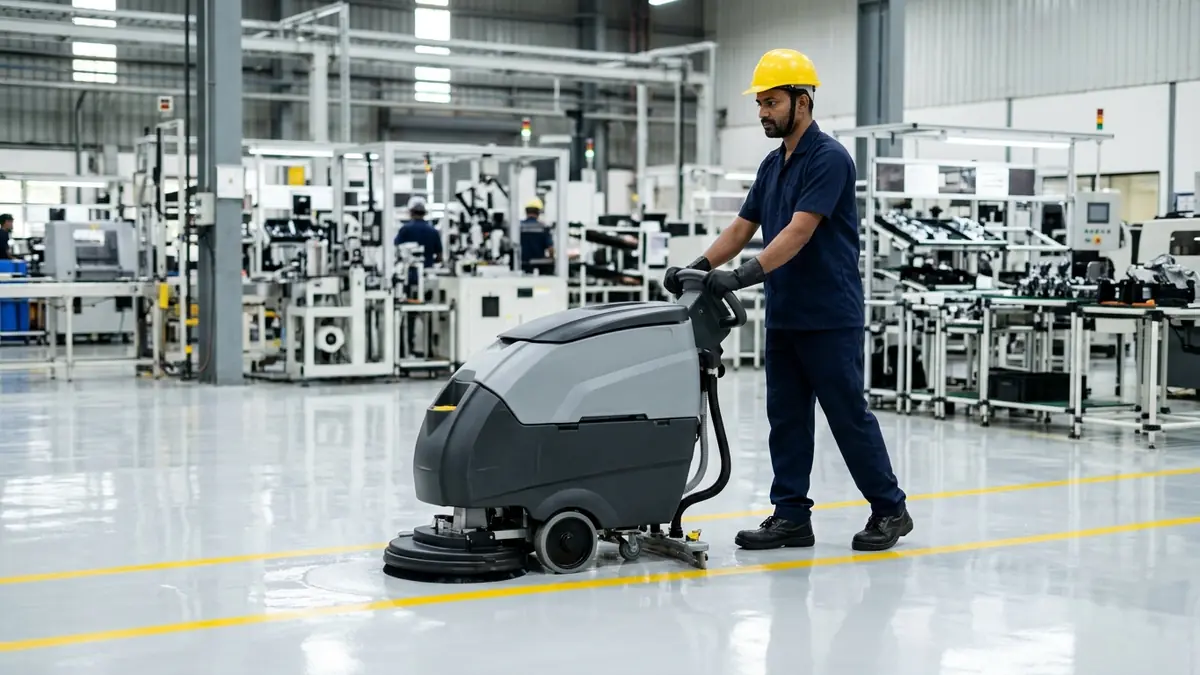
Every October and early November, Indian manufacturing units run overtime dispatch shifts to fulfil pre-Diwali orders, followed by holiday shutdowns with minimal staffing. When production resumes, plant heads face shopfloors coated in polymerised CNC coolant mist, black forklift tyre marks, stray strapping bands and choked trench drains. Following a structured post festive industrial plant cleaning 5s guide gives operations leaders an engineering blueprint to strip stubborn grease and restore safe output. Urja Facility delivers pan-India facility management services that transition factories from festive dispatch clutter back to audit-ready precision.
Grease hardens rapidly as November temperatures drop. During peak surges, temporary contract labour often stacks cartons in walkways, skips drip-tray emptying and runs wet string mops that smear emulsified oil across epoxy bays. Left untreated, metal swarf and silica grit grind into polyurethane and epoxy toppings under reach-truck wheels, causing premature resin delamination and slip liabilities.
Restoring a high-output plant requires far more than brooms or caustic powders. Providing facility management services across pan-India, our ground engineering teams pair 5S Kaizen discipline with single-disc scrubbers, automatic scrubber dryers and pH-neutral chemistry. Below, we examine sequential 5S recovery stages, epoxy-safe degreasing, hydraulic spill control and statutory labour compliance.
GUIDE INDEX Table of Contents Quick Navigation
- 01 Post Festive Industrial Plant Cleaning 5S Guide Framework
- 02 Factory Floor Degreasing Techniques & Epoxy Floor Care
- 03 Oil Spill Containment & High-Pressure Shed Jet Washing
- 04 Factories Act Section 11 & Post-Holiday Safety Inspections
- 05 Scrubber Dryer Productivity & Pan-India AMC Governance
- 06 Frequently Asked Questions (FAQs)
Post Festive Industrial Plant Cleaning 5S Guide: Core Shopfloor Recovery Framework
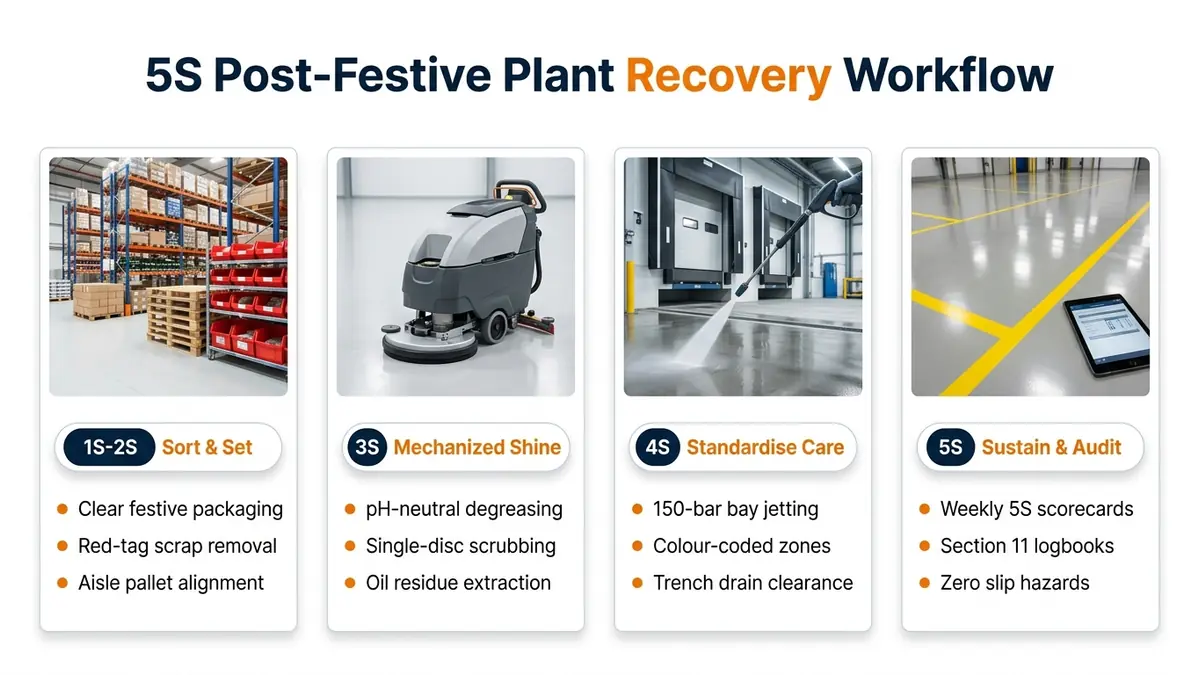
A post festive industrial plant cleaning 5s guide sequences recovery across Sort, Set in Order, Shine, Standardise and Sustain so floor scrubbing never begins before clutter leaves the aisle. Combining red-tag scrap removal with pan-India facility management services restores assembly safety within 48 hours without halting production shifts.
Jumping straight to wet floor washing while broken pallets and festive packaging still block machine perimeters wastes chemical, battery runtime and technician hours. Effective manufacturing plant assembly line 5s recovery treats shopfloor restoration as an engineered sequence. Each stage prepares the physical surface for the next mechanical intervention, ensuring deep cleaning teams reach beneath conveyors, die racks and electrical panel plinths safely.
Plant managers executing post-shutdown resets with professional mechanised housekeeping services divide the recovery window into five tightly timed operational blocks across production, utility and dispatch bays:
Stage 01 • Seiri (Sort)
Red-Tag Scrap & Packaging Purge
Segregating festive dispatch cartons, shrink-wrap film, rejected castings and obsolete jigs from active bays.
Target Waste Carton offcuts, PET strapping, broken skids and metal turnings cleared into weighed scrap bins.
Dry Extraction Industrial HEPA vacuums lift dry swarf and dust from cable trays and machine bases.
Stage 02 • Seiton (Set in Order)
Aisle & Shadow-Board Reset
Returning raw material bins, die trolleys and pallet trucks to designated floor footprints.
Clearance Rule Minimum 1.2-metre clear access restored around fire hydrants, eye-wash points and LT panels.
Visual Markings Worn 50 mm yellow PVC hazard tapes stripped and prepped for fresh post-degreasing bonding.
Stage 03 • Seiso (Shine)
Mechanised Floor & Machine Scrub
Emulsifying oxidised grease films, tyre skid marks and coolant mist across epoxy and VDF bays.
Agitation Method 175 RPM single-disc scrubbers paired with automatic scrubber dryers for instant puddle-free drying.
Machine Enclosures Colour-coded microfibre wipe-downs of CNC viewing panels, HMI screens and pneumatic manifolds.
Stage 04-05 • Seiketsu & Shitsuke
Standardise & Digital 5S Audit
Sustaining post-recovery hygiene through zone ownership charts, colour-coded kits and shift scorecards.
Zone Control Blue, yellow, red and green kits isolate oil shopfloors from canteen and washroom zones.
Audit Benchmark Weekly walkthroughs using a 5s industrial cleaning audit checklist manufacturing scorecard targeting 90%+ scores.
Factory Floor Degreasing Techniques and Epoxy Coating Care After Production Surges
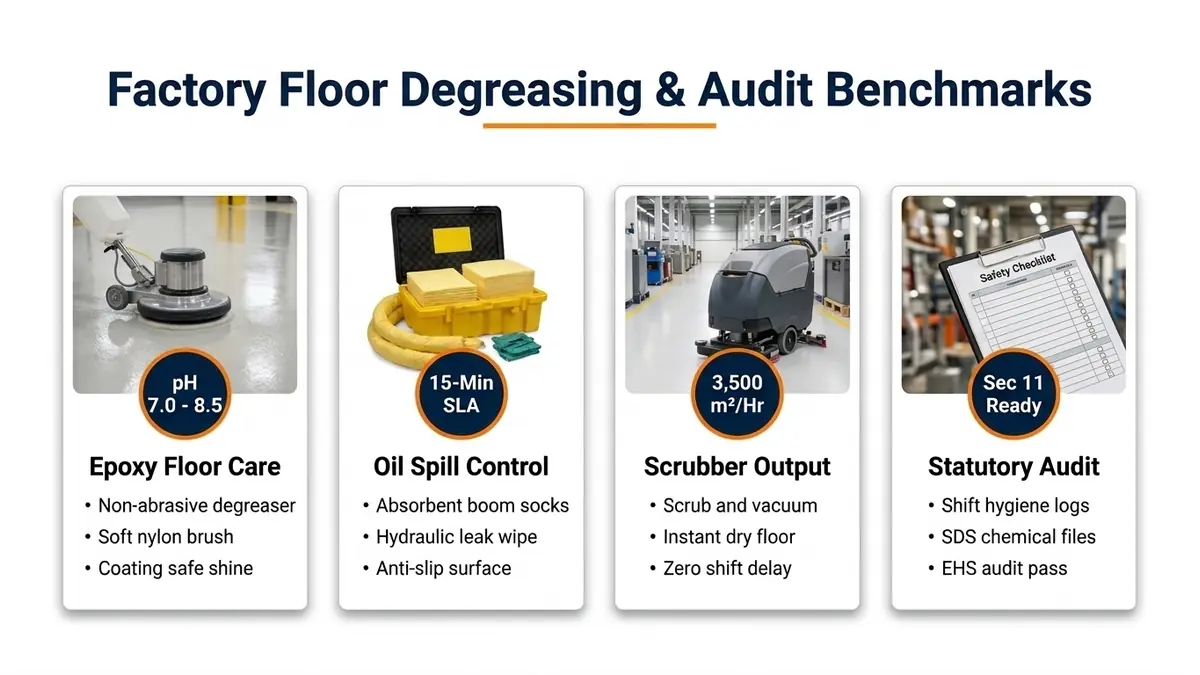
Safe epoxy and polyurethane shopfloor degreasing relies on biodegradable surfactants buffered between pH 7.0 and 8.5 applied with a 10-minute contact dwell time and low-speed nylon rotary pads. Harsh caustic soda or stiff wire brushes scratch protective resin topcoats and accelerate chemical yellowing.
Choosing the right factory floor degreasing techniques after production surge periods determines whether a 3 mm self-levelling epoxy floor lasts ten years or peels within eighteen months. Unskilled crews often dump washing soda, diesel or acid cleaner onto dark oil patches. Caustic alkali saponifies grease superficially yet etches polyurethane sealers, leaving microscopic pores that trap dirt faster.
A disciplined non abrasive industrial degreaser ph neutral guide protects floor coatings while lifting hydrocarbon soils. Water-based industrial degreasers use non-ionic surfactants buffered between pH 7.0 and 8.5. Surfactant micelles penetrate beneath grease layers, break surface tension against epoxy and suspend oil droplets for clean vacuum extraction.
Equally important is following a calibrated single disc scrubber epoxy floor maintenance procedure on heavily soiled assembly cells before wide-area scrubbing. Embedding dilution control into manufacturing plant facility management prevents slippery detergent films. Technicians execute four controlled steps:
Step 1
Dry Grit Vacuuming
Extract metal shavings, weld spatter and pallet splinters first so rotary pads never grind grit into the resin coat.
Step 2
Calibrated Dilution & Dwell
Apply pH-neutral degreaser at 2% to 5% dilution (20 to 50 ml per litre) with an 8 to 10-minute wet dwell.
Step 3
175 RPM Soft-Pad Agitation
Scrub machine perimeters using a 175 RPM single-disc machine with red or white nylon pads - never black stripping pads.
Step 4
Squeegee Vacuum Slurry Pickup
Vacuum oil slurry immediately using polyurethane squeegee blades and finish with a clean freshwater rinse pass.
Heavy Machinery Oil Spill Containment and High-Pressure Shed Jet Washing
Rapid oil spill containment isolates hydraulic and gear oil leaks within 15 minutes using hydrophobic polypropylene socks before slurry reaches storm drains. Exterior loading docks, scrap yards and VDF concrete sheds require 120 to 150-bar high-pressure jet washing to strip compacted mud and diesel soot.
Post-shutdown restarts often trigger seal weeps on hydraulic power packs, moulding presses and crane gearboxes. Without documented warehouse heavy machinery oil spill containment steps, a five-litre leak tracks across fifty metres of dispatch flooring on reach-truck wheels. Sawdust and river sand create abrasive mud that chokes sumps and violates ISO 14001 hazardous waste rules.
Trained EHS ground crews station yellow spill kits near hydraulic bays and charging stations. Operators cordon leaks with safety cones, ring puddles using hydrophobic polypropylene socks that lock in hydrocarbons and blot pools with dimpled pads. Spent absorbents go into labelled CPCB hazardous waste bags before a quick spot-degreasing pass removes residual sheen.
Exterior dispatch aprons, unloading canopies and scrap yards require a structured industrial shed high pressure jet washing protocol. Multi-site enterprises using facility management AMC solutions pair indoor scrubbing with 120 to 150-bar water jetting on unpainted VDF concrete, chequered steel plates and grating trenches to shear away compacted tyre rubber and silt without chemical runoff.
Factories Act Section 11 Compliance and Post-Holiday Floor Safety Inspections
Section 11 of the Factories Act 1948 legally obligates Indian plants to clear shopfloor refuse daily, wash workroom floors weekly with disinfectant and maintain unobstructed drainage. Pairing statutory hygiene registers with post-holiday safety inspections prevents Directorate of Industrial Safety citations and lost-time slip injuries.
Shopfloor cleanliness in India is an enforceable statutory obligation. Maintaining factories act 1948 section 11 cleanliness compliance requires plant managers to keep verifiable logs across every workroom, stairwell and passage. During winter regulatory inspections or buyer EHS audits, inspectors cross-check floor traction against signed daily sweeping logs, weekly disinfectant wash registers and 14-month wall maintenance records.
Structured post holiday factory floor safety inspection steps are equally essential before three-shift dispatch resumes. Benchmarking cells against a 5S manufacturing audit checklist flags hazards left behind during festive shutdown maintenance - including unbolted drain grates, loose welding cables, blocked fire exits and faded forklift aisle lines.
Daily Mandate
Refuse & Swarf Clearance
Section 11(1)(a) mandates daily dustless removal of dirt, metal turnings and packaging refuse from benches, workrooms and passages.
Weekly Wash
Disinfectant Floor Scrub
Section 11(1)(b) requires every workroom floor to be washed at least weekly using calibrated disinfectant and logged in shift registers.
Drainage Rule
Trench & Coolant Sump Care
Section 11(1)(c) mandates unobstructed floor drainage wherever wet machining or washing processes leave standing moisture.
EHS Restart
Slip & Line Verification
Confirm dry floor traction, intact 50 mm yellow aisle borders, updated chemical SDS folders and clear hydrant access.
Automatic Scrubber Dryer Productivity and Pan-India Industrial AMC Governance
Deploying walk-behind and ride-on automatic scrubber dryers elevates cleaning output up to tenfold over manual labour while cutting water and chemical waste by 40%. Partnering with a pan-India facility management services provider guarantees machine uptime, trained operators and uniform 5S SLAs across every plant location.
Manual mopping cannot keep pace with large manufacturing sheds. String mops leave floors wet for twenty minutes and spread oily bucket water across aisles. Measuring industrial plant automatic scrubber dryer productivity explains why automotive, pharma and FMCG plants embed machine-to-area ratios inside contracts, backed by strict industrial cleaning safety protocols for operator PPE and battery bays.
| Equipment Type | Coverage Rate | Pad Pressure | Dryness & Industrial Zone |
|---|---|---|---|
| Manual Mop Bucket | 250 sq.m / hr | Hand pressure | 20-min air dry; compact offices only |
| 175 RPM Single-Disc | 450 sq.m / hr | 35 - 45 kg | Needs wet-vac; CNC oil bays & corners |
| Walk-Behind Scrubber | 3,500 sq.m / hr | 30 - 50 kg | Instant dry; assembly aisles & stores |
| Ride-On Auto Scrubber | 6,500 sq.m / hr | 60 - 110 kg | Instant dry; large warehouses & plants |
| 150-Bar Jet Washer | 550 sq.m / hr | 150 bar jet | Trench drain; loading docks & aprons |
Sustaining post-festive cleanliness year-round requires moving from ad-hoc cleanups to an annual maintenance contract governed by measurable SLAs. Because Urja Facility delivers pan-India facility management services across industrial estates, SEZs and logistics parks nationwide, multi-plant enterprises gain one accountable standard with dedicated machine fleets, preventive servicing, SDS-certified eco-chemicals and monthly 5S digital scorecards.
FAQs
Essential answers on post-festive factory 5S recovery cover epoxy-safe pH-neutral degreaser selection, automatic scrubber dryer coverage rates, hydraulic oil spill containment timelines, Factories Act Section 11 cleanliness documentation and pan-India industrial AMC deployment across manufacturing hubs.
Why do manufacturing plants need a dedicated 5S recovery drive after festive production surges?
Pre-festive overtime shifts build up CNC coolant mist, tyre rubber, hydraulic oil drips and carton scrap while maintenance windows shrink. A structured 5S recovery drive eliminates slip hazards, protects epoxy coatings from grit wear and restores assembly efficiency ahead of winter audits.
Which degreaser pH range is safe for epoxy and polyurethane factory floors?
Epoxy and polyurethane toppings require biodegradable non-abrasive degreasers buffered between pH 7.0 and 8.5. Caustic soda cleaners above pH 11 or acidic descalers chemically etch resin topcoats, dull surface gloss and trigger micro-cracking under forklift loads.
How much faster is an industrial automatic scrubber dryer than manual mopping?
A walk-behind automatic scrubber dryer cleans and dries 2,000 to 3,500 square metres per hour, while ride-on units exceed 6,000 square metres per hour. Manual bucket mopping covers barely 250 square metres per hour and spreads dirty oil film across aisles.
What does Section 11 of the Factories Act 1948 mandate for plant cleanliness?
Section 11 of the Factories Act 1948 requires Indian factories to clear dirt and refuse daily from workrooms and passages, wash floors weekly with disinfectant, maintain effective wet-process drainage and log periodic wall repainting or surface washing.
How should warehouse crews contain hydraulic oil spills without halting dispatch?
Crews place safety cones within two minutes, ring the leak with hydrophobic polypropylene absorbent socks to protect drains, blot pooled oil with pads and run a pH-neutral battery scrubber pass that leaves the aisle immediately dry.
Does Urja Facility provide mechanised 5S housekeeping and AMC support across pan-India?
Yes. Urja Facility delivers pan-India facility management services across major industrial estates, manufacturing clusters, logistics parks and corporate campuses throughout India, deploying site-dedicated mechanised machines, EHS-trained operators and measurable 5S SLA governance.