
 AMC Guide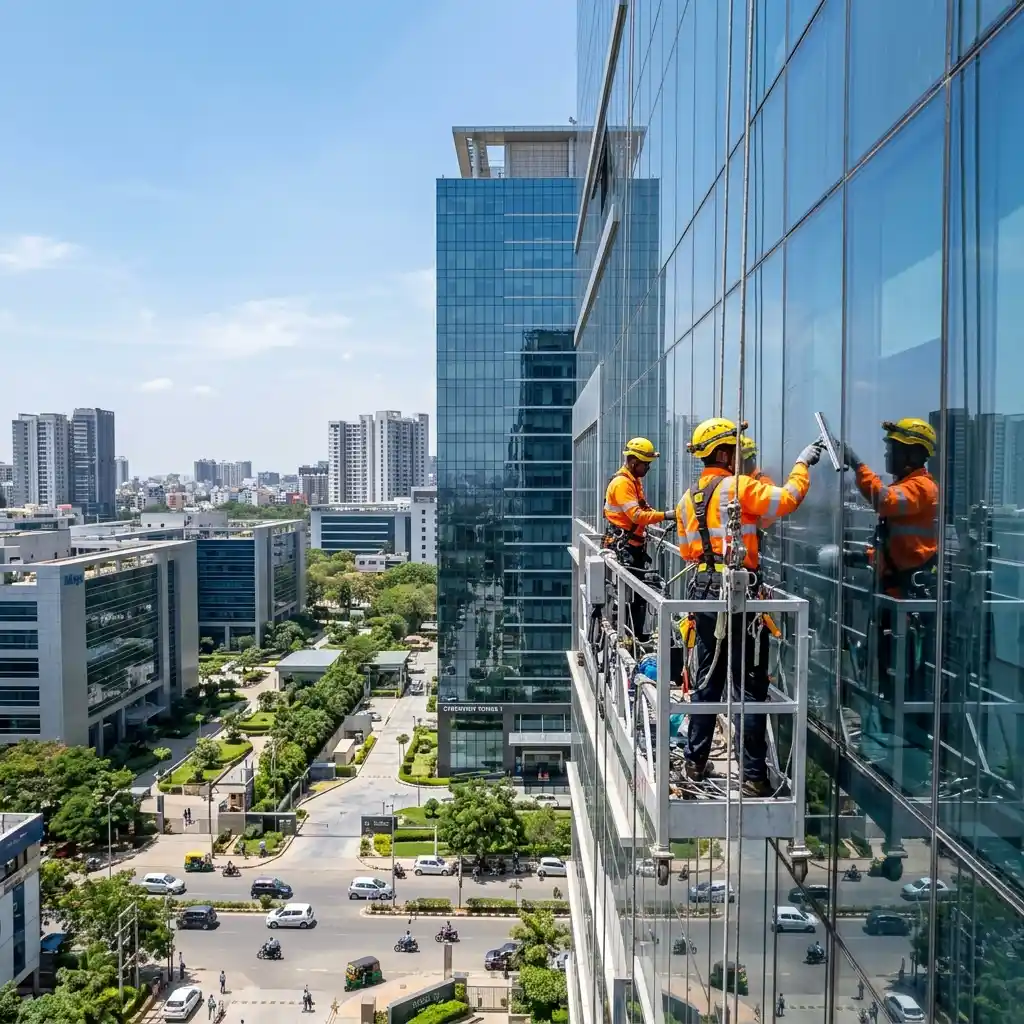
That shiny new IT park in Bengaluru or Gurugram looks great from a distance. Up close, the dust and monsoon stains on the glass panels tell a different story. Eventually, every facility team needs an exterior cleaning crew to keep the building looking sharp.
But here is the hard truth. If you bring in local, uncertified workers who skip basic safety checks, you are taking a massive risk. Every time someone steps over the terrace wall of a 15-story commercial building without proper safety checks, your company takes on huge legal liability. Just one equipment failure or a sudden gust of wind can turn a regular cleaning job into a disaster. This puts operations on hold and damages your brand reputation permanently.
Following strict safety protocols for facade cleaning is not just about ticking a compliance box. It is about saving lives. Safe high-altitude maintenance needs certified teams, serious risk checks, and proper gear. In this guide, we break down exactly what facility managers need to check before they let anyone start exterior work.
Understanding the risks of high-rise building washing
High-rise building washing is dangerous work. Workers face extreme hazards like gear failure, strong winds, and weak anchor points. Without strict safety protocols for facade cleaning, companies risk fatal accidents and heavy legal blame. Hiring professional vendors who use certified rope access methods and thorough site audits is the only way to manage these dangers.
A modern corporate office looks great because of its glass exterior, but cleaning it is dangerous work. When your cleaning team is hanging 200 feet in the air, there is absolutely no room for mistakes.
Think about the daily challenges. A sudden strong wind can smash a cleaning platform against the glass. The harsh Indian summer sun drains a worker's energy fast. If they use old ropes or unchecked harnesses, the risk of falling goes up dramatically. And it is not just the cleaners who are at risk. A dropped tool or bucket can easily hit someone walking in the parking lot below.
To prevent these accidents, your corporate facility management team must insist that all vendors providing building glass cleaning services follow strict safety rules. They need to run daily team briefings, check their gear, and get a clear Permit to Work before starting.
IRATA standards and facade safety protocols in India
IRATA standards are the global rulebook for working at height. Using these rules ensures that industrial exterior cleaning happens with a mandatory two-line rope system. Professional exterior cleaners in India follow these guidelines to keep technicians safe and prevent fatal falls on the job.
India might not have one specific law just for cleaning buildings at heights, so professional companies look to global rules. The best standard out there is IRATA (Industrial Rope Access Trade Association). If the exterior glass cleaning contractors you hire do not follow these rules, you are taking a big chance.
The main idea behind IRATA training is simple. Never depend on just one rope. A trained worker always uses a two-line setup. They have one main rope to go down and work, and a totally separate safety rope that catches them if the first one snaps. Both ropes get tied to completely different, tested anchor points on the roof.
High-Rise Building Washing IRATA Protocols
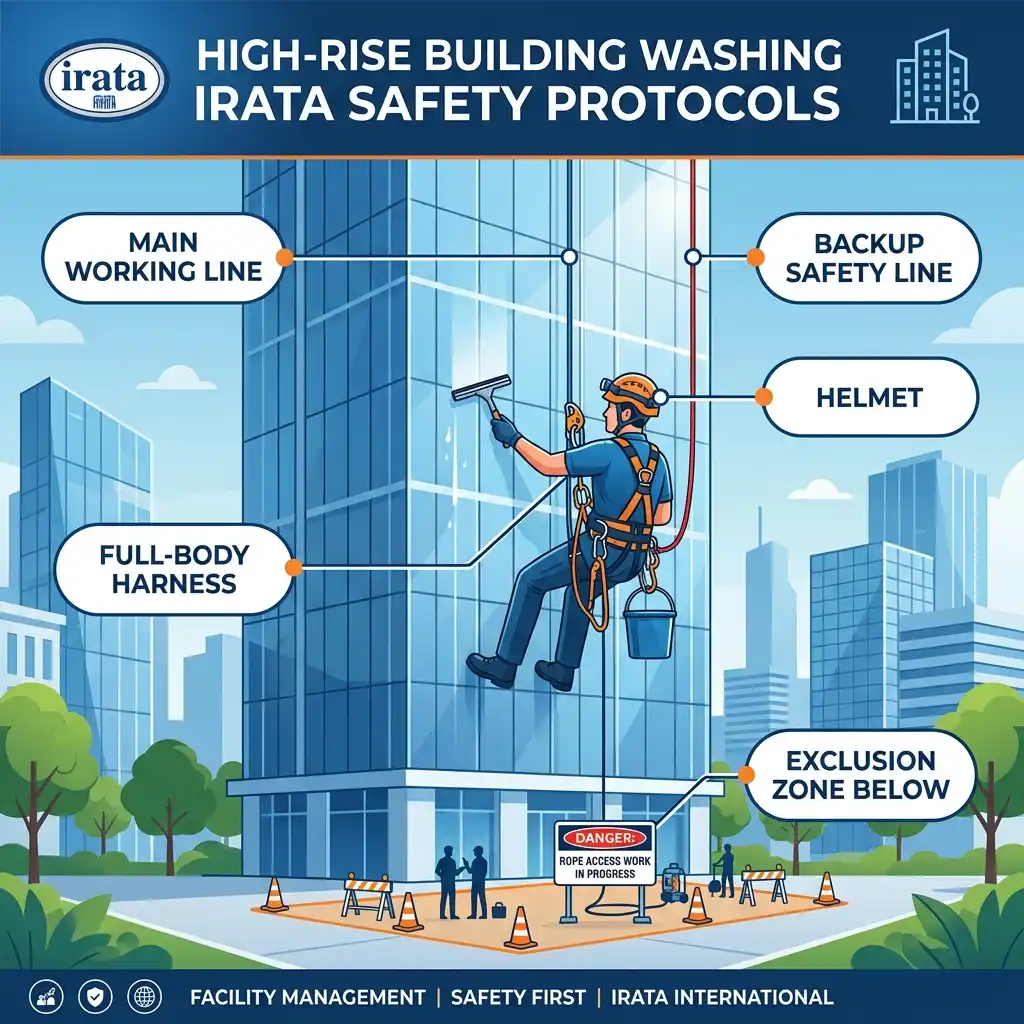
On top of that, safe industrial exterior cleaning means keeping strict records. The team must check every clip, harness, and rope before they use it. They also have to throw gear away after a certain number of years, even if it looks perfectly fine. Experienced cleaners know that following these rules is the only way to avoid accidents.
5-Step site risk assessment for commercial facade maintenance
A deep 5-step site risk assessment is mandatory for commercial facade maintenance. It involves checking the building layout, testing anchor points, setting up double-line rope systems, tracking weather, and having a ready rescue plan. These steps ensure cleaners execute their work safely, protecting both people and property.
Before a single drop of water touches the glass, a complete risk assessment must happen. Commercial facade maintenance needs clear planning that accounts for the unique shape of your building. A standard assessment follows these five steps:
1
Analyze architectural layout Identify protruding ledges, fragile glass panels, and safe rigging zones before starting work.
2
Load-test anchor points Rigorously test terrace anchors to confirm they can support the combined weight of technicians and heavy equipment.
3
Establish double-line rope systems Set up and verify the ropes, ensuring they do not rub against sharp concrete edges.
4
Monitor weather in real-time Halt high-rise operations immediately if wind speeds cross 25 mph or a lightning storm approaches.
5
Deploy emergency rescue plans Keep a documented procedure ready to safely lower an incapacitated technician to the ground within minutes.
Factory shed roof cleaning and industrial park exterior maintenance
Factory shed roof cleaning comes with unique problems like old roofing materials and steep slopes. Safe industrial park exterior maintenance requires proper fall arrest systems, crawling boards for weight distribution, and strictly enforced safe zones on the ground. Applying robust safety rules in factories prevents severe injuries and keeps operations running.
Corporate glass towers are tricky because of the sheer drop, but factory buildings have their own set of problems. Cleaning a factory shed roof is highly risky because workers often have to walk on weak materials like old asbestos cement, faded fiberglass skylights, or very slippery metal sheets.
For industrial park exterior maintenance, workers cannot just wear normal boots and hope for the best. They need to use proper roof ladders or crawling boards to spread their weight out so they do not break through the roof. Even on a sloped metal roof, they must wear a full body harness connected to a strong anchor point.
Also, you have to block off the area right under where they are working. Factories usually have trucks moving around or people walking on the shop floor below. You must stop activity in that specific area to make sure nobody gets hurt if a cleaning tool falls off the roof.
The role of corporate facility management in contractor verification
Corporate facility management teams hold the ultimate responsibility for checking the credentials of exterior cleaning contractors. They must review IRATA certificates, read equipment inspection logs, and enforce site specific safety protocols. By partnering with professional building washers, organizations reduce legal risks and ensure hazard-free operations.
If an accident happens, the legal blame usually falls right on the principal employer and the facility manager. You cannot just pass the blame to a cheap vendor. Your facility management team has to actively check that the cleaning company actually knows how to work safely at heights.
Never just take their word for it. Ask to see their papers. A good commercial facade maintenance company will gladly show you their team's safety certificates, their gear checking logs, and a clear plan on exactly how they will safely clean your specific building.
Verify technician certifications Ensure every worker holds a valid IRATA or equivalent certification for working at heights, renewed regularly.
Audit equipment inspection logs Request physical or digital logs proving that ropes, harnesses, and carabiners are inspected by a competent authority every six months.
Review the site-specific rescue plan Confirm that the vendor has a documented emergency procedure tailored to your building's exact layout and height.
"When you compromise on safety verification for high-altitude cleaning, you are gambling with human lives. Professional facility management ensures every protocol is strictly enforced."
Explore Our Mechanized Housekeeping ServicesFrequently asked questions
Facility managers frequently ask about the essential safety protocols for facade cleaning, why IRATA certifications matter, and the distinct challenges of factory roof maintenance. Understanding these points shows why hiring professional building washers with strict safety compliance is a must for corporate spaces.
What are the most critical safety protocols for facade cleaning in India?
The most critical safety protocols for facade cleaning include conducting a site-specific risk assessment, ensuring the use of a two-line rope access system (working line and backup safety line), validating IRATA certifications for all technicians, and continuously monitoring weather conditions before any high-rise building washing begins.
Why is IRATA certification important for exterior glass cleaning contractors?
IRATA (Industrial Rope Access Trade Association) certification is the global benchmark for working at heights. It ensures that exterior glass cleaning contractors undergo rigorous training in safe rope access, self-rescue techniques, and equipment inspection, minimizing the risk of fatal falls during commercial facade maintenance.
How is factory shed roof cleaning different from glass facade maintenance?
Factory shed roof cleaning often involves navigating fragile surfaces like asbestos or thin metal sheets, which require specialized fall arrest systems and crawling boards to distribute weight. In contrast, glass facade maintenance relies primarily on suspended access equipment like BMUs or rope access along a vertical drop.
What weather conditions restrict industrial park exterior maintenance?
Industrial park exterior maintenance and high-rise building washing must be immediately suspended during heavy rain, lightning storms, or when wind speeds exceed 25 mph. High winds can destabilize platforms and rope technicians, making the operation extremely hazardous.
References & Authority Citations
- IRATA International: The authoritative global body for industrial rope access standards and technician safety certifications. (irata.org)
- Fall Arrest Systems: Industry-standard safety protocols relying on dual-line setups to prevent workplace injuries during high-rise building washing.
492 verified Google reviews
Ensure strict safety compliance for your facility
Urja Facility manages comprehensive housekeeping and facility operations across Madhya Pradesh. We prioritize safety, technology-driven reporting, and rigorous technician training to deliver hazard-free maintenance.