 Corporate
A manufacturing plant works smoothly only when the work environment is safe. For facility managers, a common question comes up: what are industrial cleaning safety protocols and how do they affect daily production? Without a proper system, routine cleaning easily becomes a risk. Slips, chemical spills and machinery accidents cost the Indian manufacturing sector thousands of working hours every year.
When your housekeeping team works without standard hazard cleaning rules, you risk heavy safety penalties and factory downtime. The truth is quite simple. Safety should never come last in heavy engineering or food processing plants. It needs a clear plan that protects the workers, machinery and your profits.
This detailed guide explains all the basic rules from wearing PPE to handling strong chemicals. We will see how modern facility management makes sure everything follows safety laws while keeping your production lines running without any stops.
Why Manufacturing Site Hygiene Compliance is Critical
Manufacturing site hygiene compliance means following EHS guidelines strictly to stop workplace accidents, product contamination and machine breakdowns. Using strong factory safety protocols for cleaning brings down slip and fall accidents by 40% and helps factories clear safety audits without any heavy fines.
Keeping an industrial plant clean is not just about making it look good. The main goal is to reduce risks. When dealing with fire-prone dust, oil spills and heavy machines, manufacturing site hygiene compliance becomes a strict legal need. A missed spill on the shop floor does not just look bad. It is an immediate danger that can stop a full shift.
By following strict factory shed safety guidelines, plant managers protect their biggest assets which are their workforce and equipment. Following rules also directly helps product quality, specially in sectors like pharmaceuticals and food processing where mixed contamination leads to huge product recalls.
Core PPE Rules for Factory Cleaners
Core PPE rules for factory cleaners make it necessary to use steel-toed boots, high-visibility jackets, thick chemical-proof gloves and safety glasses. These safety layers act as the final shield against factory dangers like acid splashes, falling items and slipping accidents.
Personal Protective Equipment (PPE) is a must-have requirement. Factory areas have unique risks that normal office cleaners rarely face. Because of this, the PPE rules for factory cleaners must be strictly followed before any worker enters the shop floor.
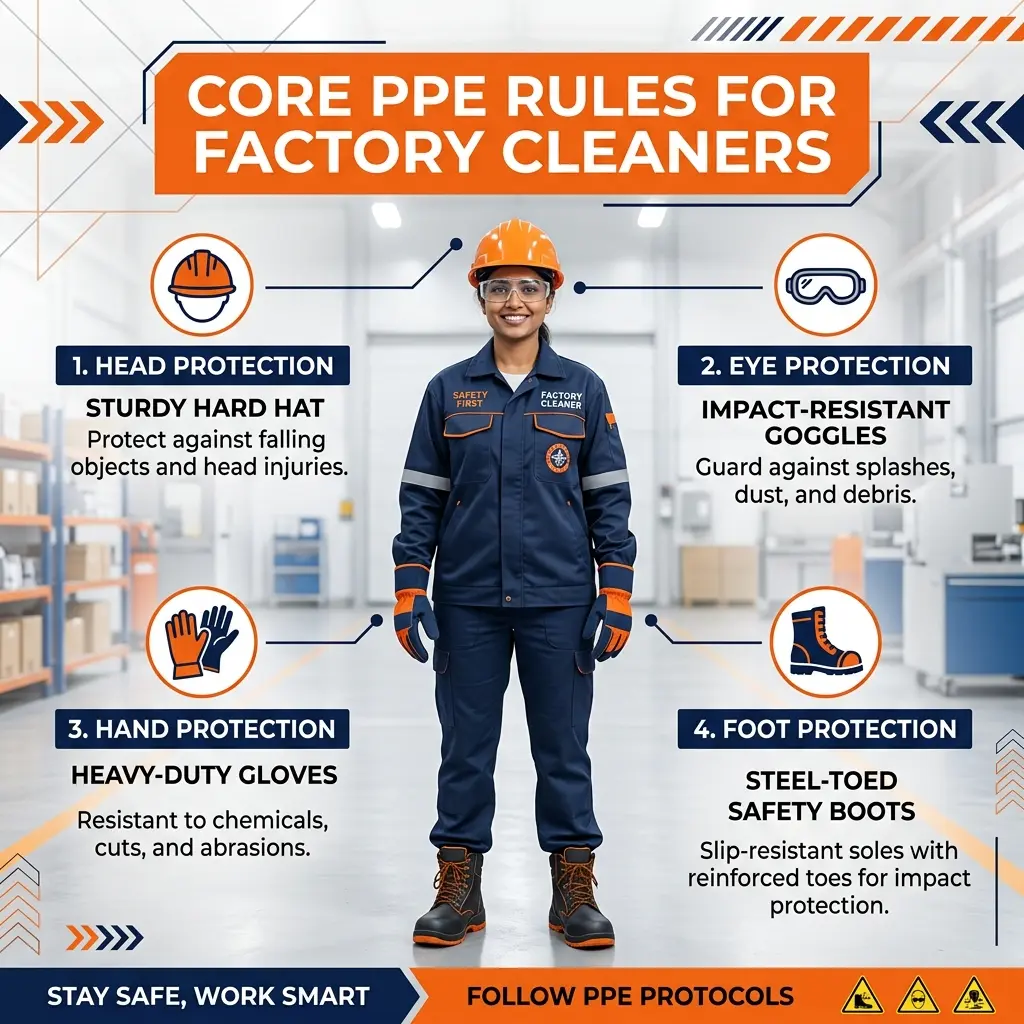
A standard industrial cleaning kit must include the following things:
- Foot Protection: Anti slip and steel toed boots to stop crush injuries and slips on oily floors.
- Hand Protection: Nitrile or thick rubber gloves made specially for chemical handling in industrial cleaning.
- Eye and Face Protection: Safety glasses or full face covers to stop chemical splashes from reaching the eyes.
- Respiratory Protection: Quality masks or breathing gears when dealing with bad fumes or fine factory dust.
Standard Chemical Handling in Industrial Cleaning
Standard chemical handling in industrial cleaning means storing different chemicals separately, using safe containers and following safety labels. Cleaners must never mix ammonia and bleach together and should always check Safety Data Sheets before using strong factory level liquids.
Industrial degreasers, acids and alkalis are highly effective but they are very dangerous as well. Using these liquids in a wrong way leads to breathing issues and bad skin burns. Proper chemical handling in industrial cleaning needs regular training and strict matching with the chemical safety sheets.
Chemical Handling Dos and Don'ts
- DO make sure all small containers have clear safety stickers.
- DO wear needed PPE gear before opening any chemical drum.
- DO make sure there is good fresh air when using strong liquids in closed spaces.
- DON'T mix different cleaning chemicals. Mixing bleach and acid creates deadly gas.
- DON'T keep heavy chemical drums on top shelves where they can easily fall and spill.
Heavy Machinery Cleaning Safety and Lockout Tagout
Heavy machinery cleaning safety depends fully on the Lockout Tagout system. This rule makes sure machines are fully turned off and cannot be started by mistake while cleaners remove dirt, oil and dust from moving machine parts.
Cleaning near active production lines is one of the most risky jobs in a factory. Heavy machinery cleaning safety demands that no worker should ever try to clean a machine while it is running. This is exactly where the Lockout Tagout system becomes very important.
Before any deep cleaning starts, the machine must be turned off, cut from its main power source and physically locked. A tag is added to tell all workers that maintenance work is going on. This stops the deadly accidental startup of machines while a cleaner is working inside or near dangerous moving parts.
EHS Compliant Housekeeping: The Factory Shed Safety Guidelines
EHS compliant housekeeping adds health and safety rules into daily cleaning habits. It needs quick spill control, clear emergency exit paths, proper waste sorting and the use of machine scrubbers to maintain good air quality and floor safety.
Safety standards decide how a facility runs on a daily basis. EHS compliant housekeeping is not a separate job. It is mixed directly into the daily work of the plant. Following strict factory shed safety guidelines makes sure the work area stays productive and safe by law.
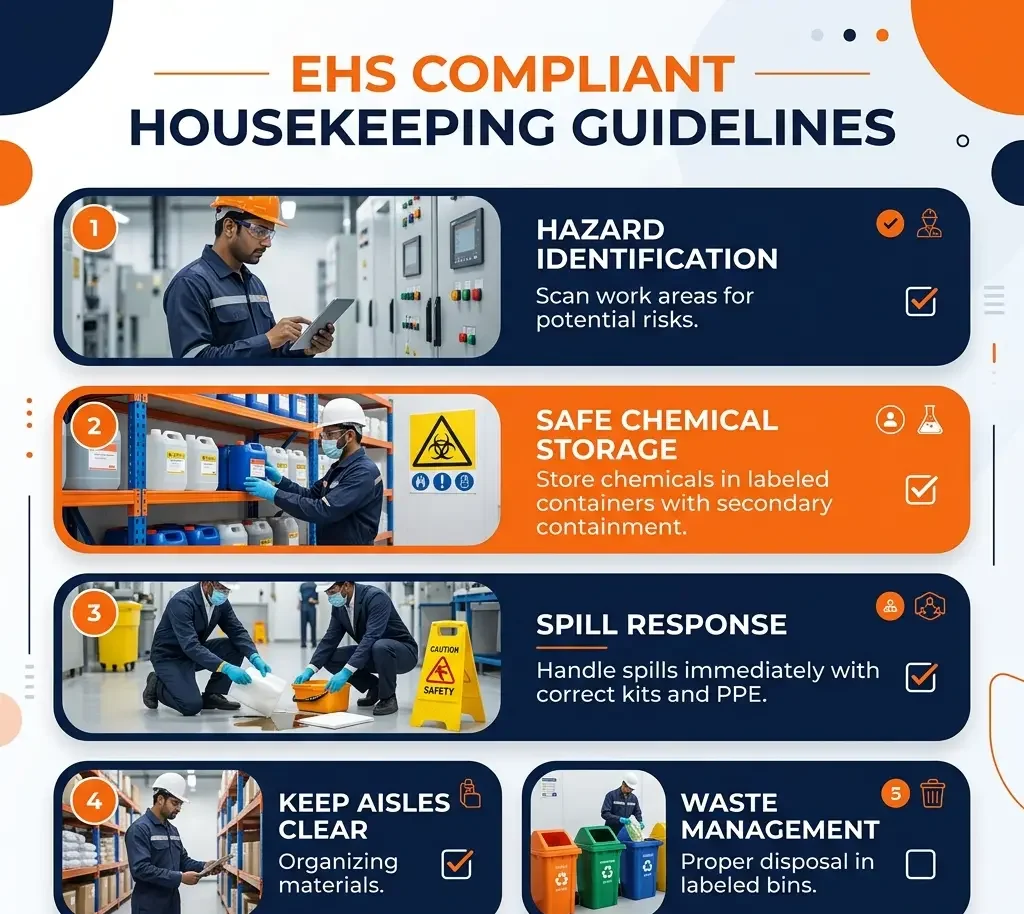
A safe factory makes sure that emergency exits are never blocked by cleaning machines or waste bins. Waste sorting is watched closely to separate harmful factory waste from normal garbage. Also, using mechanized cleaning equipment like ride on auto scrubbers easily reduces flying dust particles which protects the breathing health of the entire workforce.
The Ultimate Safety Checklist for Industrial Housekeeping
A safety checklist for industrial housekeeping makes daily work standard and easy. It tracks PPE usage, machine lock verification, chemical stock checks and spill kit readiness. This helps facility managers check safety rules and spot dangers before they cause any bad accidents.
To keep safety standards high, supervisors must depend on proper audits just like doing a strong 5S Audit on the floor. A daily safety checklist for industrial housekeeping removes guesswork and brings answerability across the whole cleaning team.
| Inspection Area | Safety Protocol Check | Frequency |
|---|---|---|
| PPE Compliance | Ensure all staff are wearing correct boots, gloves and goggles. | Pre shift (Daily) |
| Chemical Storage | Verify containers are closed, labeled and separated properly. | Daily |
| Machinery Zones | Confirm lockout procedures are active before deep cleaning equipment. | Per Task |
| Spill Readiness | Check that spill boxes are fully stocked and accessible. | Weekly |
| Walkways and Exits | Ensure emergency pathways are completely free of clutter and dry. | Continuous |
Conclusion
Understanding exactly what are industrial cleaning safety protocols is the first step toward building a strong manufacturing space. From forcing mandatory PPE usage to managing hard chemical handling in industrial cleaning, safety needs good skills and constant checking. A random cleaning approach leaves your factory open to accidents and safety failures.
By teaming up with a professional agency that does EHS compliant housekeeping, plant managers can remove these risks completely. Make sure your plant works at its best speed by trusting experts who value safety as much as cleanliness.
Frequently Asked Questions
What are the standard factory safety protocols for cleaning?
Standard factory safety protocols include hazard checking, proper fresh air, correct PPE usage, Lockout Tagout rules and strict matching with chemical safety sheets before starting any cleaning task.
What are the mandatory PPE rules for factory cleaners?
Mandatory PPE for factory cleaners includes thick cut proof gloves, chemical splash glasses or face covers, steel toed non slip boots and high visibility jackets. Quality masks are needed when handling strong chemicals.
How is chemical handling managed during industrial cleaning?
Chemical handling is managed by strictly following safety labels, storing alkalis away from acids, using safe storage boxes and making sure workers never mix wrong cleaning liquids.
Where can I find industrial cleaning safety protocols in Indore?
For certified industrial cleaning safety protocols in Indore, special facility management companies like Urja Facility provide proper Factories Act aligned and EHS compliant cleaning programs specially made for heavy manufacturing plants.