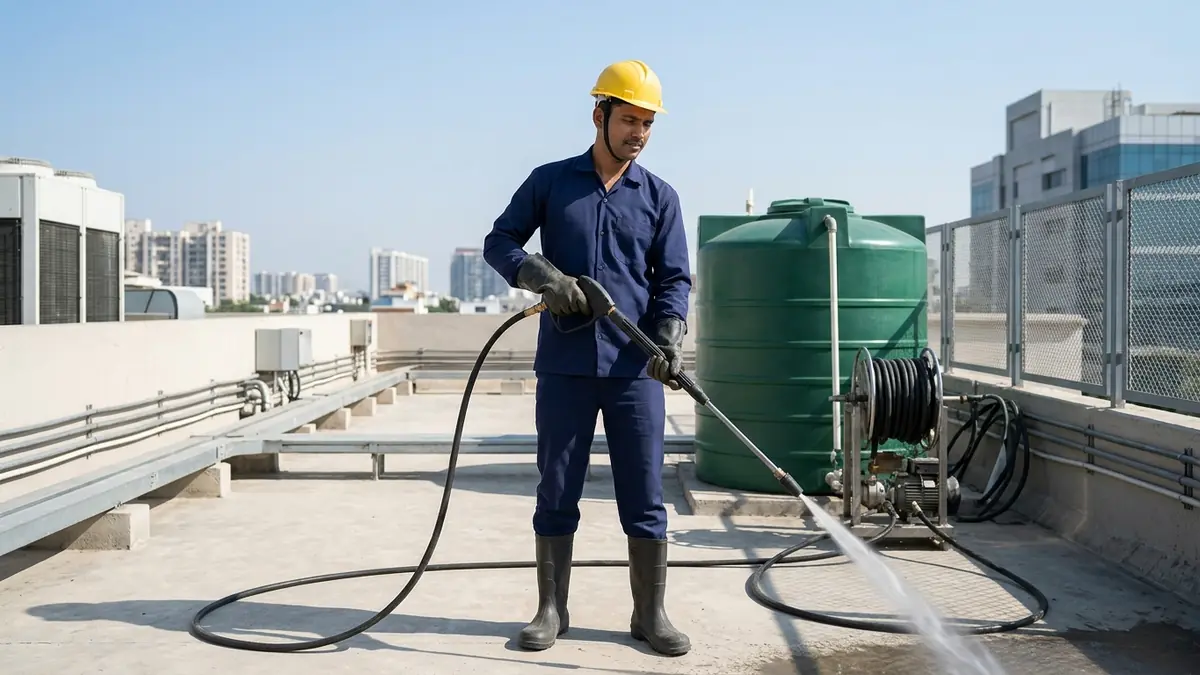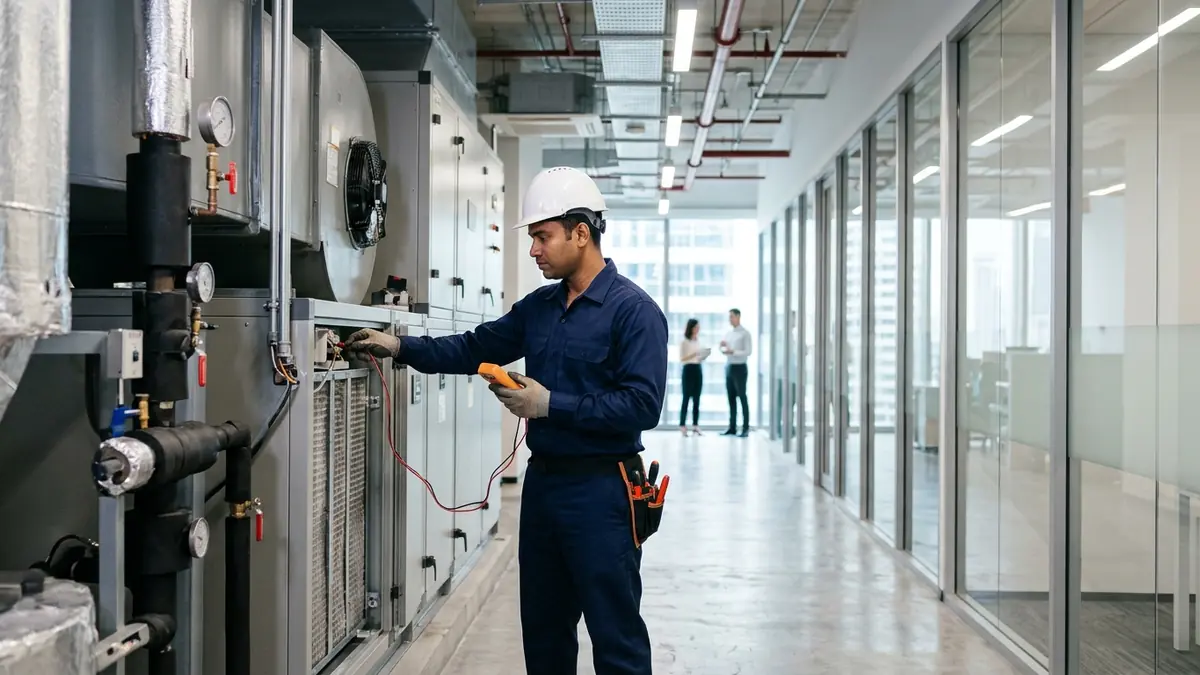

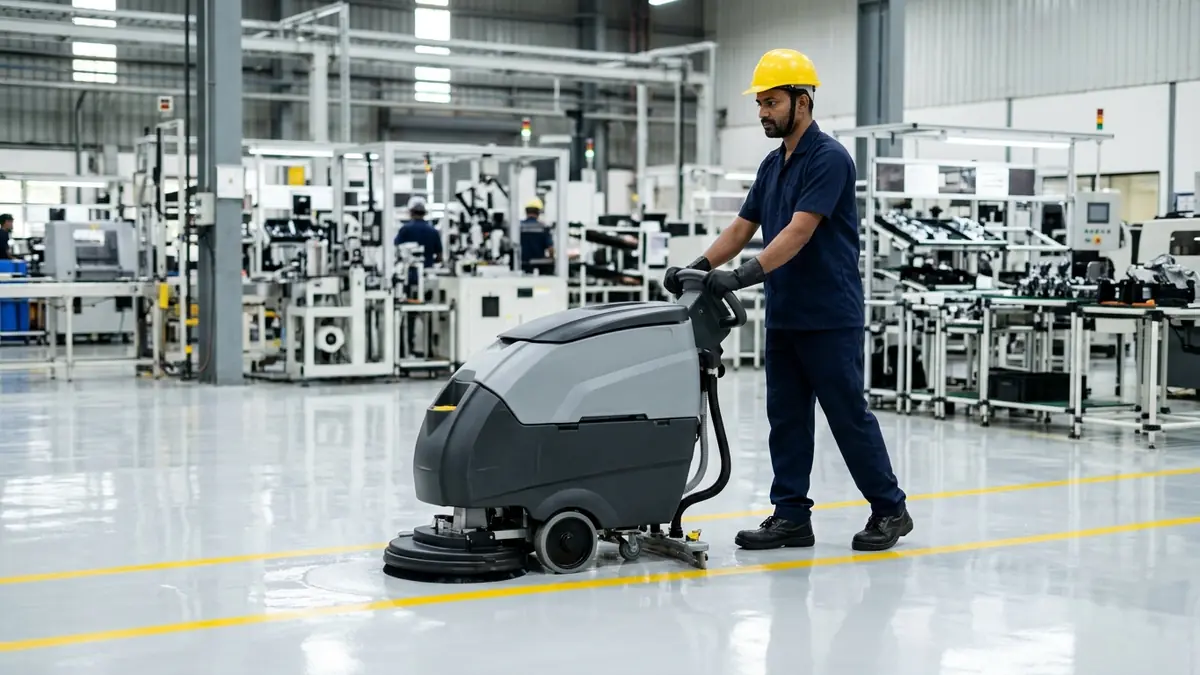
 Industrial 5S
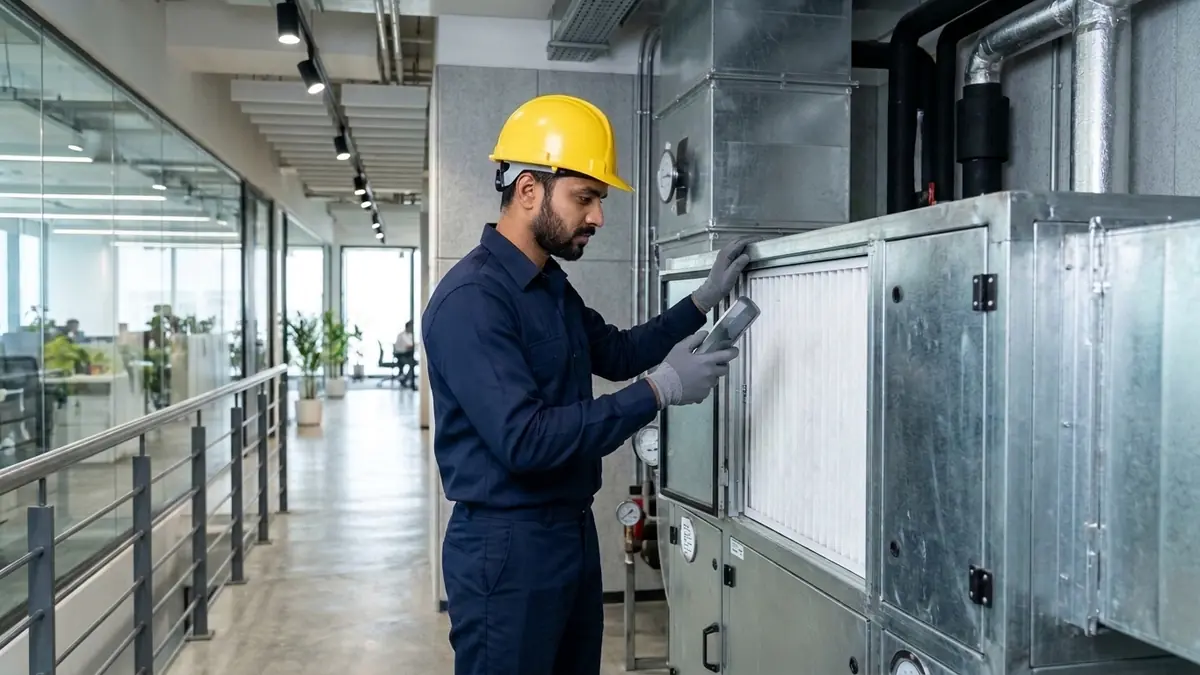
Maintaining strict winter indoor air quality standards corporate offices depend on becomes an urgent engineering priority from November through February across Indian business hubs. As surface temperatures drop, atmospheric thermal inversion traps vehicular exhaust and fine aerosols right at commercial tower intake heights. Facility heads in Delhi NCR, Mumbai, Bengaluru, Pune, Hyderabad and Indore face a tough paradox. Sealing fresh air dampers blocks outdoor haze, yet suffocates occupied floors with rising carbon dioxide and recirculated germs.
Modern corporate campuses house hundreds of employees inside sealed glass curtain-wall envelopes. Without fine filtration and clean ductwork, central air handling units distribute sub-micron particulate matter and post-monsoon fungal spores across desk bays. Staff report dry eyes, afternoon fatigue and recurring viral coughs within weeks of winter onset, while dry air raises electrostatic discharge risks inside server rooms.
Urja Facility delivers pan-India facility management services engineered to solve seasonal air quality challenges through measurable MEP and hygiene protocols. Enterprise campuses require an integrated framework covering MERV 13 filtration, mechanical duct decontamination, humidity balance and HEPA housekeeping. This guide details regulatory benchmarks, HVAC winter protocols and audit checklists for facility leaders across pan-India.
GUIDE INDEX Table of Contents Quick Navigation
Winter Indoor Air Quality Standards Corporate Offices Must Maintain
Winter indoor air quality standards corporate offices follow align ISHRAE IEQ guidelines, NBC 2016 Part 8 and ASHRAE 62.1 thresholds: keeping PM2.5 under 15 to 25 ug/m3, CO2 below 800 ppm, TVOC under 500 ug/m3 and relative humidity between 40% and 55% across occupied floors.
Indoor air governance starts with concrete numbers. Comfortable room temperature never guarantees safe breathing air. A glass boardroom held at 23 degrees Celsius can still harbour PM2.5 levels four times above clinical limits alongside carbon dioxide concentrations that cut cognitive decision-making scores by 20 percent.
Corporate EHS teams across India benchmark workplace air against ISHRAE Standard 10001, NBC 2016 Part 8 and ashrae 62.1 commercial office ventilation rates. Delivering facility management services across pan-India through our hard technical MEP maintenance services anchors daily plant operations to four measurable pillars:
Pillar 01 • Particulates
Fine Aerosol Limits
Blocking winter smog entry across lobbies and workstation bays.
PM2.5 & PM10 PM2.5 below 15 ug/m3 (ISHRAE Class A) and PM10 below 50 ug/m3.
Pressurisation 5 to 12 Pascals positive indoor pressure against street air.
Pillar 02 • Ventilation
Fresh Air Dilution
Preventing CO2 and chemical VOC buildup on sealed floors.
ASHRAE 62.1 5 CFM/person plus 0.06 CFM/sq ft treated outdoor air intake.
CO2 & TVOC CO2 kept under 800 ppm and TVOCs below 500 ug/m3.
Pillar 03 • Hygrometry
Moisture & Thermal Band
Protecting respiratory comfort and server static thresholds.
Winter Humidity 40% to 55% RH across floors and IT switching zones.
Operative Temp 22.5°C to 25.0°C with draft velocity under 0.25 m/s.
Pillar 04 • Bio-Safety
Microbial Control
Neutralising fungal spores and seasonal viral aerosols.
CFU Threshold Airborne bacterial and fungal count strictly below 500 CFU/m3.
UV-C Hygiene 253.7 nm continuous irradiation over cooling coils and pans.
Commercial HVAC Winter Ventilation Protocols and PM2.5 Reduction Steps
Effective commercial HVAC winter ventilation protocols pair treated fresh air units with positive building pressurisation and upgraded MERV 13 secondary filters. Cleaning EU-4 pre-filters every 15 days and sealing bypass gaps around filter frames cuts indoor PM2.5 concentrations by up to 85 percent.
Winter reverses normal plant room behaviour. Chiller loads fall by half while ambient AQI frequently spikes past 300. Leaving Treated Fresh Air dampers open on coarse filters pulls black carbon soot indoors, whereas closing intakes traps metabolic CO2. Disciplined commercial hvac winter ventilation protocols pre-condition outdoor air through washable EU-4 meshes and electrostatic or fine bag filters to sustain positive building pressure, pushing clean air outward whenever lobby doors open.
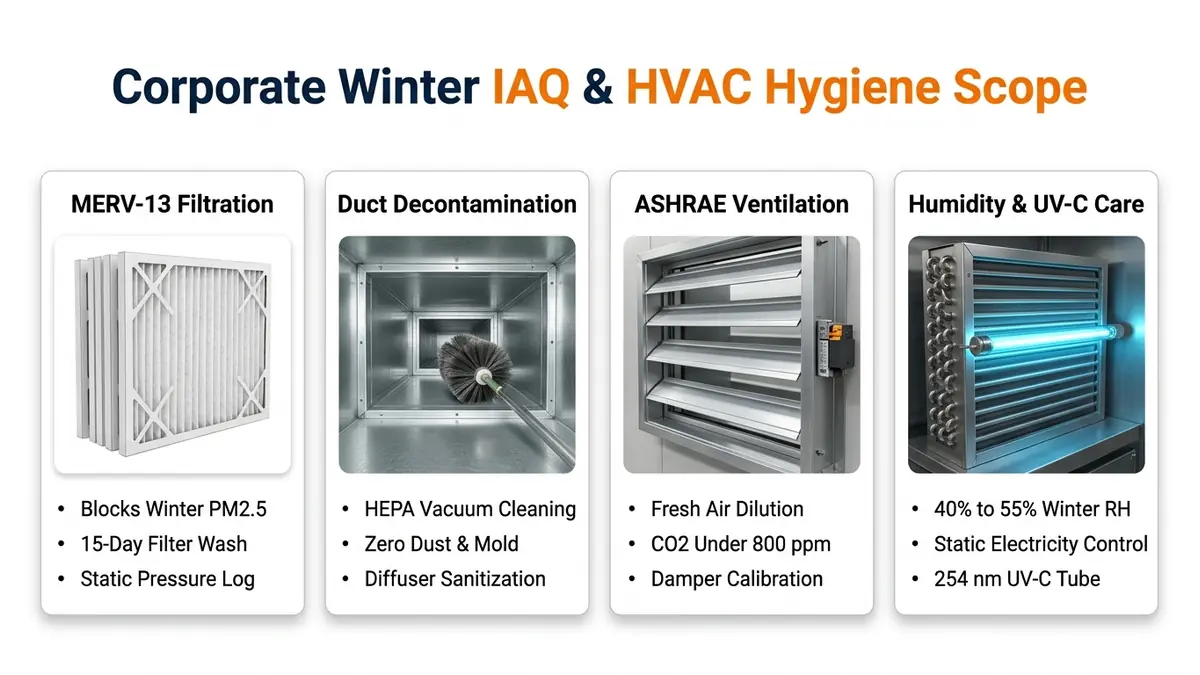
Figure 1: 4-Pillar Engineering Architecture for Corporate Winter IAQ & HVAC Duct Hygiene
Reliable office indoor air quality pm2.5 reduction steps depend on upgrading secondary AHU filtration. Legacy MERV 8 meshes let over 80 percent of 0.3 to 2.5 micron winter smog pass straight into breathing zones. Applying a practical corporate central ac filter merv 13 rating guide captures fine particulates safely. Engineers verify fan static curves and VFD limits under a commercial MEP preventive maintenance schedule, installing V-bank MERV 13 filters sealed with EPDM neoprene gaskets so zero dirty air bypasses the frame.
| Filter Grade | 0.3 - 1.0 µm Capture | Initial Pressure Drop | Corporate Winter Role |
|---|---|---|---|
| MERV 8 (EU-4) | Under 20% | 35 - 55 Pa | Stage-1 washable pre-filter; wash every 15 days |
| MERV 13 (EU-7) | 50% - 65% | 80 - 115 Pa | Mandatory Stage-2 filter for office floor AHUs |
| MERV 14 (EU-8) | 75% - 84% | 115 - 145 Pa | High-smog metro TFA intakes and executive zones |
| HEPA H13 | 99.95% MPPS | 220 - 280 Pa | Booster purifiers, medical rooms and R&D labs |
HVAC Duct Hygiene and Commercial HVAC Duct Mold Prevention Protocol
A thorough commercial HVAC duct mold prevention protocol eliminates post-monsoon fungal colonies inside supply plenums, acoustic linings and cooling coils before winter recirculation intensifies. Mechanical rotary brushing under negative HEPA suction paired with 254 nm UV-C coil lamps keeps ductwork hygienically clean.
Monsoon moisture lingers inside chilled water AHU chambers, drain pans and acoustic duct linings well into November. As cooling valves throttle down in mild weather, Aspergillus and Penicillium spores colonise damp organic dust inside dark metal trunks. Deploying a scientific commercial hvac duct mold prevention protocol isolates duct zones and uses 4,000 CFM negative-pressure HEPA collectors with pneumatic rotary brushes to strip compacted dust beds per NADCA ACR standards.
Flu season also demands active airborne virus particulate control in office buildings. Mounting 253.7 nm UV-C germicidal lamps downstream of cooling coils destroys coil biofilm and inactivates airborne viral DNA in single-pass airflow, working alongside commercial office deep cleaning services across workstation touchpoints.
Pre-Winter Overhaul (Oct - Nov)
Deep Duct & AHU Restoration
- Borescope inspection of supply trunks, return plenums and VAV boxes.
- Negative-pressure HEPA suction and rotary brush duct decontamination.
- Food-grade foaming coil wash and condensate U-trap sanitisation.
Active Winter Cycle (Nov - Feb)
Fortnightly Hygiene Checks
- Pressure washing Stage-1 EU-4 pre-filters every 15 days during smog peaks.
- Magnehelic pressure logging across MERV 13 banks (replace before 250 Pa).
- UV-C quartz lamp output check and weekend diffuser damp wiping.
Sick Building Syndrome Prevention, Workplace Humidity and Server Room ESD Control
Balancing winter indoor relative humidity between 40% and 55% prevents Sick Building Syndrome symptoms among staff while protecting enterprise server rooms from electrostatic discharge. Pairing ASHRAE 62.1 outdoor air dilution with precision CRAC humidification and anti-static HEPA vacuuming safeguards people and IT hardware.
Heating cold winter air to 24 degrees Celsius drops indoor relative humidity below 30 percent, drying nasal mucosa and tear films. Targeted sick building syndrome winter symptoms prevention pairs NDIR demand-controlled ventilation with low-VOC green cleaning chemistries to eliminate afternoon headaches, sinus irritation and printer ozone buildup.
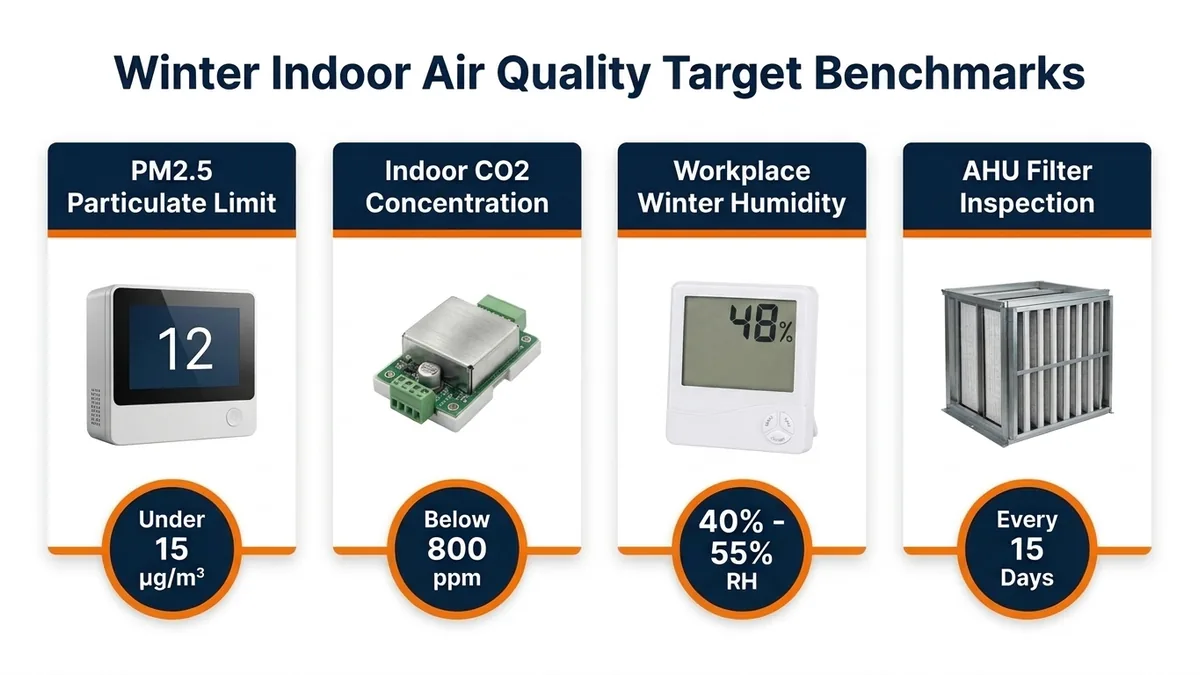
Figure 2: Operational SLA Target Thresholds for Corporate Winter Indoor Air Quality Management
Disciplined corporate workplace humidity control winter settings between 40 and 55 percent RH using isothermal steam humidifiers also cause airborne influenza droplets to settle faster. Inside IT rooms, enforcing office server room esd dust control standards under ASHRAE TC 9.9 prevents dry-air static spikes above 4,000 volts and conductive soot bridging. Our teams delivering IT office and corporate campus facility services execute sub-floor HEPA vacuuming, anti-static floor care and 24x7 CRAC dew-point logging.
Step-by-Step Commercial Building IAQ Audit Checklist for Facility Managers
A structured commercial building IAQ audit checklist evaluates spatial air quality across morning baselines and afternoon occupancy peaks. Technicians validate PM2.5, CO2 and TVOC readings, verify AHU filter pressure drops, inspect ductwork via optical borescopes and align HEPA housekeeping workflows.
Consumer desk sensors drift heavily in dry weather. Enterprise EHS managers execute a calibrated commercial building iaq audit checklist in November and January. Notably, clean HVAC air fails if janitors use dry brooms that launch settled dust back into return grilles. Pairing engineering checks with mechanized housekeeping services using HEPA backpack vacuums locks fine dust out of workspace air:
Step 1
Breathing-Zone Sensor Mapping
Log PM2.5, CO2, TVOC and RH at 1.1m seated height (1 point per 2,500 sq ft) at 8:00 AM baseline and 3:30 PM peak load with NABL-calibrated meters.
Step 2
AHU Filter & Damper Check
Measure magnehelic pressure drop across MERV 13 banks, inspect EPDM frame gaskets for air bypass and verify fresh air actuator CFM openings.
Step 3
Borescope & Microbial Sampling
Inspect supply trunks and VAV dampers with optical borescopes for dust cake or mould, supported by agar plate CFU microbial air tests.
Step 4
HEPA Housekeeping Sync
Eliminate dry sweeping, complete HEPA carpet vacuuming before 8:00 AM, verify neutral low-VOC dispensers and check basement CO exhaust fans.
Pan-India Integrated AMC Governance, Compliance and Commercial ROI
Consolidating HVAC preventive maintenance, duct hygiene and mechanized HEPA housekeeping under a pan-India facility management AMC cuts HVAC fan energy draw by up to 18%, lowers winter employee sick days and delivers NABL-certified IAQ documentation for IGBC, LEED and WELL audits.
Splitting filter washing, duct cleaning and daily janitorial care across disconnected local contractors creates accountability gaps whenever indoor PM2.5 rises. Urja Facility delivers pan-India facility management services that unify hard MEP engineering and mechanized soft services under one SLA through our integrated annual maintenance contracts.
Across IT parks and corporate towers in Bengaluru, Mumbai, Delhi NCR, Pune, Hyderabad and our central hub managing facility management AMC operations in Indore, clean coils and V-bank MERV 13 filters cut AHU blower energy draw by 15 to 20 percent while safeguarding workforce health.
NABL IAQ Test Dossiers
Certified lab reports for PM2.5, CO2, TVOC and CFU counts supporting ISO 45001 and EHS audits.
IGBC, LEED & WELL Credits
MERV 13 filter logs, ASHRAE 62.1 airflow sheets and low-VOC chemical registers for green ratings.
Energy & Productivity ROI
Up to 18% lower AHU fan kWh consumption alongside reduced winter respiratory absenteeism.
Pan-India SLA Governance
Unified digital logs, borescope photologs and 100% EPF and ESIC compliance across every site.
FAQs
Essential questions on corporate winter indoor air quality clarify ISHRAE and ASHRAE 62.1 workplace thresholds, MERV 13 AHU filter retrofits, fortnightly winter maintenance intervals, Sick Building Syndrome mitigation, server room ESD protection and pan-India AMC audit deliverables.
What are the recommended winter indoor air quality standards for corporate offices in India?
ISHRAE IEQ and ASHRAE 62.1 guidelines specify indoor PM2.5 below 15 to 25 ug/m3, PM10 under 50 ug/m3, CO2 below 800 ppm, TVOCs under 500 ug/m3 and relative humidity between 40% and 55%.
Can existing commercial AHU systems be upgraded to MERV 13 filters without replacing fans?
Yes. Commercial AHUs with Variable Frequency Drives upgrade cleanly from MERV 8 to V-bank MERV 13 filters, holding initial pressure drop within 85 to 110 Pascals after verifying fan curves.
How frequently should corporate HVAC ducts and AHU pre-filters be cleaned in winter?
EU-4 pre-filters require washing every 15 days in winter. Secondary MERV 13 filters are replaced every 4 to 6 months based on pressure drop, while mechanical duct cleaning runs every 12 to 24 months.
Why do employees experience headaches and fatigue inside air-conditioned offices during winter?
Closed fresh air dampers trap CO2 above 1,200 ppm and indoor VOCs. Combined with dry air below 35% RH, this triggers Sick Building Syndrome symptoms including drowsiness, dry eyes and headaches.
Why is winter humidity and dust control critical for corporate server rooms and IT hubs?
Humidity below 35% RH plus fine dust creates static discharges above 4,000 volts. ASHRAE TC 9.9 requires sub-floor HEPA vacuuming and CRAC humidification to prevent server hardware faults.
Does Urja Facility provide winter IAQ audits and HVAC maintenance across pan-India?
Yes. Urja Facility delivers pan-India facility management services across IT parks, banking towers and corporate offices nationwide, unifying HVAC care, duct hygiene, NABL air testing and HEPA housekeeping.